Exploring the rapid ascent of B2B digital commerce—what’s changing?
With even more of our lives moving online, commerce is changing fast. Digital commerce is rapidly becoming a must-have for B2B and B2C organisations alike, and investment in these solutions continues to shape how businesses operate. Gartner predicts that 80% of sales interactions between suppliers and buyers will occur via online channels by 2025.
In simple terms, digital commerce means buying and selling things using digital platforms. It’s not just about buying something online. It’s about the entire process: browsing online, getting recommendations, and making purchases on a marketplace.
What is B2B Digital Commerce
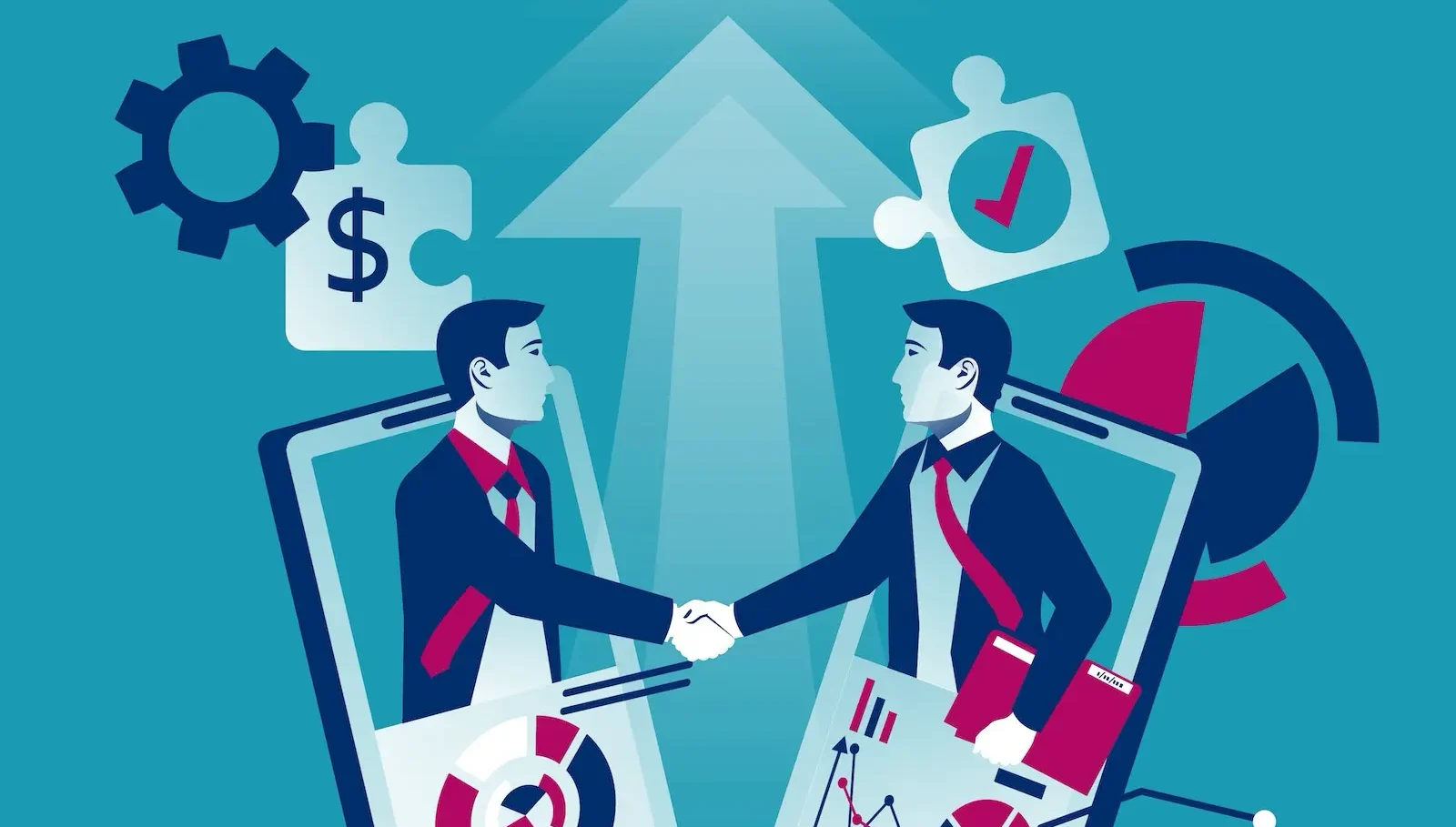
B2B (business-to-business) digital commerce refers to the online transactions and commercial activities that take place between businesses. It’s basically companies doing their shopping and selling online instead of through traditional brick-and-mortar channels. We’re talking digital platforms, websites, online marketplaces—everything that allows businesses to buy and sell products, services, or information.
B2B vs. B2C Ecommerce: What’s the Difference?
B2B and B2C (business-to-consumer) ecommerce might sound similar, but they’re different beasts. With B2C, you’re dealing with regular folks shopping online for personal stuff, like clothes, gadgets, and home goods. It’s all about appealing to individual customers and their wants and needs.
B2B ecommerce is the business world’s version of online shopping. Companies aren’t buying products to use personally. They’re stocking up on raw materials, equipment, services, and whatever else they need to keep their operations ticking along. The buying process is usually more complex, with bulk orders, negotiated pricing, and integrated systems to manage the whole supply chain.
In a nutshell, B2C caters to individual shoppers looking for the latest trends or best deals, while B2B is all about facilitating those big-ticket transitions between businesses to keep the corporate wheels turning.
The 4 Main Types of B2B Digital Commerce
1. B2B2C
B2B2C is a bit of a mouthful. It fuses B2B and B2C operations to create a multi-step selling process. First, you’ve got businesses selling to other businesses (the B2B part). Then, those businesses turn around and use that product or service to sell something to regular customers.
A classic example would be a company that manufactures electronics. They sell their gadgets and components to retailers or distributors—that’s the B2B transaction. Then, those retailers list the products on their websites or in stores for everyday consumers to purchase—the B2C part of the puzzle.
The aim is to bridge the gap between businesses and end-users by having an intermediary company acting as the middleman. The B2B2C model essentially piggybacks off both types of ecommerce to create a supply chain that connects manufacturers with customers.
2. Wholesale
The wholesale model in B2B ecommerce is all about buying in bulk. Think Costco, but for businesses stocking up on goods and supplies instead of family-sized snack packs.
On one side, you’ve got manufacturers and distributors who produce products in large volumes. These are the wholesale sellers. On the other side, you’ve got retailers, contractors, or other businesses that need to purchase the products in large quantities to keep their own operations running smoothly. They’re the wholesale buyers.
Rather than dealing with a bunch of small, individual orders, the wholesale business model streamlines everything. The B2B sellers list their goods on ecommerce platforms or direct wholesale websites, and the business buyers can browse catalogs, compare prices, and place bulk orders. Wholesale prices tend to be discounted since the orders are so big. Plus, the B2B platforms used to facilitate wholesale shopping make it easy to track inventory, manage shipping logistics, and handle all those big-ticket transactions digitally. The value of the US online wholesale trade now sits at over 3.7 trillion dollars.
3. Manufacturers
Manufacturers are the companies that actually produce the goods and products—they sit at the start of the entire supply chain. Rather than selling directly to consumers, manufacturers rely on B2B channels to offload their products to other businesses, whether that’s wholesalers, retailers, or distributors.
The manufacturer model is all about getting those freshly made products into the hands of businesses. This has historically been done by ordering with a sales representative via phone or email but, in recent years, organisations have adopted digital platforms and online marketplaces to make this process more seamless and self-service. The manufacturers list their catalogs, product specs, and price lists, giving potential customers a one-stop shop to browse and buy what they need. It’s a much more efficient way for makers to reach a wide pool of B2B buyers compared to traditional sales methods. They don’t have to set up a billion individual accounts or negotiate contracts one by one. Today, online channels make up nearly 70% of all shipments in the manufacturing sector.
4. Distributors
Distributors are the middlemen of the B2B supply chain. They link up manufacturers with retailers, contractors, or any other businesses that need products and materials. Think of them as the big warehousing operations that can take huge volumes of goods from multiple manufacturers and then parcel that inventory out to different buyers. They’re essentially one-stop shops where businesses can source from a wide variety of suppliers all under one (metaphorical) roof.
In the B2B ecommerce space, distributors set up their own digital storefronts or seller accounts on major platforms and marketplaces. They list huge catalogs of products from various manufacturers, pricing, and availability. Businesses can browse that catalog, compare options, and place orders digitally.
The real perk of using distributors is convenience. Instead of dealing with multiple manufacturers individually, buyers can just hit up their favourite distributors and grab everything they need in one place. The distributors handle all the back-end logistics, like ordering, warehousing, and shipping.
Why is B2B Ecommerce Important?
We’re living in an era where everything moves fast. B2B firms can’t afford to be slowed down by outdated processes, supply chain snags, or communication breakdowns with suppliers and partners. B2B ecommerce provides a streamlined digital ecosystem that helps companies operate with more business agility.
Here are some of the main advantages.
- Consolidate the chaos. Instead of dealing with reams of paperwork, back-and-forth emails, and phone tag just to place orders or manage inventory, B2B platforms consolidate it all into one smooth online experience. You get transparent pricing, real-time data on product availability and delivery times, and other important information.
- Open up new opportunities. B2B ecommerce helps businesses reach international markets by breaking down geographical barriers and operating and accepting orders around the clock. A small supplier in Boise can now easily market their niche products to companies halfway around the world.
- Reduce operational costs. With built-in digital procurement, inventory tracking, secure payment processing, and other core business activities, companies reduce the amount of manual work and admin costs. They can also avoid overstocking or hitting cash flow bottlenecks which can be costly.
- Gain a competitive edge. Businesses today can’t hide away behind archaic, analog solutions. Having an ecommerce presence is almost a necessity today, and businesses that don’t adopt some form of digital commerce will end up losing customers to more technologically advanced competitors.
How B2B eCommerce is Changing Sales
The traditional B2B sales process was a slog. Think endless sales meetings, PowerPoint pitches, and back-and-forth negotiations. It felt like running a marathon just to get a deal across the finish line.
Today, things are much easier. Digital B2B platforms have modernised the way businesses buy and sell with each other. Instead of visiting multiple wholesalers and manufacturers in person, buyers can now log into an online platform and get all the product information, specs, and pricing without a salesperson ever picking up the phone. They can compare offerings, request quotes, and place orders all through self-service portals that operate 24/7. According to research by McKinsey, 35% of B2B buyers rate ecommerce as the most effective sales channel—that’s more than in-person sales (26%), email (10%), and telephone (8%).
It’s not just about transactional efficiency, though. B2B ecommerce is transforming the entire sales experience, with features like customised catalogs, personalised recommendations, and rich content that gives buyers total clarity on what they’re buying.
On the selling side, an online presence allows companies to capture the leads and data they never could through traditional channels. They can analyse customer behaviour, preferences, and order trends, and use those insights to tailor their marketing and upsell strategies.
B2B ecommerce is even changing up the traditional roles in sales organisations. With so much of the research and transactions happening digitally, we’re seeing more tech-savvy teams focused on nurturing relationships and strategic deals.
The 4 Stages of B2B Business Growth?
1. New/Startup
The early start up stage is scrappy and fun. You’ve developed a viable product or service and are now starting to market and sell it to your target audience. Sales might be modest, but hopefully, they’re on an upward trajectory. Your main focus is on reaching your target market and identifying consumer segments.
As you start making your first sales, you’ll probably need to tweak your product or adjust your advertising based on initial customer feedback and demand. For example, if you’re selling a new software tool for project management, you might discover that customers are requesting a specific feature you hadn’t initially included.
One of the biggest hurdles for startups is getting their brand and products in front of the right customers and building out a robust sales pipeline. The traditional sales hustle of pounding pavement, cold calling, and scheduling a ton of meetings is tough for a lean team to sustain early on. B2B ecommerce is changing that. These digital marketplaces give startups a shortcut to exposure through slick online storefronts and product catalogs that buyers around the world can browse at their leisure.
2. Growth
Once you’ve launched your product and found your footing, you’ll enter the growth stage. During this phase, you’ll pass the breakeven point and start to see increasing profits. As you generate more revenue and attract new customers, you’ll be able to cover your operating expenses and have the chance to explore new business opportunities.
However, with growth comes more competition. You’ll need to revisit and refine your B2B business model, focusing on key areas like your sales approach, marketing strategies, and operational efficiency.
3. Expansion
The expansion stage is where you’ll really start to see your numbers grow. You should see a significant increase in cash flow and revenue as you expand into new markets and distribution channels. However, this growth may start to slow down as the market becomes saturated and new competitors emerge.
To continue capitalising on growth, you’ll need to focus on gaining more market share and exploring new revenue sources. This might mean developing new product lines or targeting different customer segments.
4. Maturity
At this stage, you’ve established a strong market presence and enjoy steady, predictable revenue streams. Growth rates may slow down compared to earlier stages, but you benefit from a loyal customer base and refined operations. This is the time to focus on optimising efficiency, maintaining high customer satisfaction levels, and innovating to stay ahead of the competition.
Common Challenges
- Complex pricing structures. B2B transactions often involve pricing negotiations, volume discounts, and long-term contracts, which can be tricky to manage online. For instance, a supplier of industrial components might offer tiered pricing based on order size and special rates for long-term clients.
- Product complexity. Many B2B products require extensive customisation and configuration, making the online ordering process more complicated. Think of a company selling specialised machinery that needs to be tailored to each client’s specific requirements.
- Integration with legacy systems. Integrating new digital commerce platforms with existing ERP, CRM, and supply chain management systems can be challenging. For example, a distributor might need to sync its new ecommerce site with an old inventory management system to ensure accurate stock levels.
- Customer expectations. B2B buyers increasingly expect a B2C-like shopping experience, which can be hard to deliver in a complex B2B environment. A business purchasing office supplies online, for instance, might want the same seamless experience they get from consumer retail sites, including easy navigation and quick checkout.
- Regulatory compliance. Adhering to industry-specific regulations and standards when selling online is crucial. For example, a pharmaceutical company must ensure its online sales comply with health regulations and safety standards.
- Global operations. Managing sales across different regions with varying languages, currencies, and tax laws can be daunting. A software company selling internationally might need to handle business transactions in multiple currencies and comply with local tax regulations.
- Long sales cycles. B2B sales often involve multiple decision-makers and a longer decision-making process, complicating the customer journey. For instance, a company selling enterprise software might need to go through several rounds of approval before closing a deal.
- After-sales service and support. Providing effective support and service online, including handling returns and maintenance services, is essential. For example, a manufacturer of heavy equipment must offer robust online support for troubleshooting and parts replacement to ensure customer satisfaction.
Busting the Biggest B2B Digital Commerce Myths
Myth #1: B2B customers may prefer not to order online
Traditionally, most B2B sales occurred offline—usually in an office with a sales rep and a buyer (or a team of buyers). Because the whole “road warrior” sales rep image was so prevalent, it’s easy to think that’s what B2B customers want.
However, B2B customers appreciate the convenience of online ordering. Modern B2B buyers are used to consumer ecommerce and often prefer the efficiency and ease of placing orders digitally, especially when reordering frequently purchased items.
In fact, the changing role of the sales rep is having a unique impact on B2B sales. Buyers prefer self-service options, with self-directed interactions outpacing human interactions by 15 versus 12.
Myth #2: Price transparency is necessary for e-commerce
While price transparency can weed out uncommitted buyers, it’s not always essential for B2B ecommerce. Many B2B transactions involve negotiated pricing and quote-based models. Digital platforms can still handle this through gated pricing, RFQ systems, and custom catalogs.
Myth #3: Online ordering lacks warmth
Online ordering doesn’t have to feel impersonal but ultimately, businesses care more about seamless processes than personal handholding. B2B ecommerce platforms can incorporate personalised experiences, live chat support, and dedicated account managers to maintain a warm, customer-centric approach, making buyers feel valued and supported.
Myth #4: An online store does not allow for custom orders
Advanced B2B ecommerce platforms are equipped to handle complex, customisable orders. Features like configurators and interactive product selectors pinpoint customer needs, ensuring they can order tailored products just as easily as standard ones.
Myth #5: Customers exhibit hesitation when it comes to making significant online purchases
For small consumer purchases, perhaps. But B2B orders often involve huge transaction values that are actually more secure and traceable through digital procurement systems.
While some customers may initially hesitate, trust in online B2B transactions is growing. Providing detailed product information, secure payment options, and excellent customer service can reassure buyers and encourage them to make significant purchases online with confidence.
Benefits of Utilising a B2B Ecommerce Platform
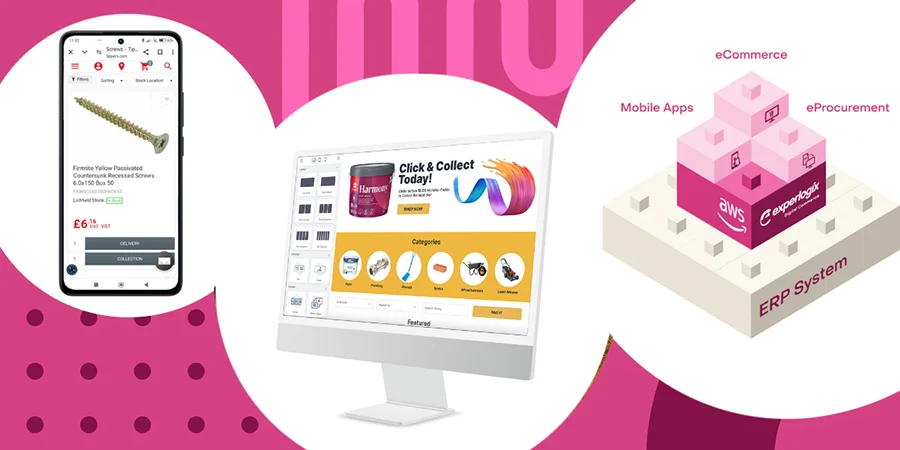
Partnering with a specialized B2B ecommerce provider like Experlogix allows businesses to implement robust, scalable digital commerce solutions tailored to their unique needs and requirements.
With deep expertise in ERP integration, complex product configuration, and buyer-specific catalogs and pricing, Experlogix helps companies create seamless omnichannel purchasing experiences that drive efficiency, sales growth, and customer satisfaction.
Here’s a collection of other important benefits.
Minimise back-office expenses and phase out outdated systems
We’ve all dealt with clunky legacy systems that are more trouble than they’re worth. But modern B2B ecommerce solutions can streamline and automate all those tedious back-office processes, letting you cut costs while still operating at peak efficiency.
Implement programs that encourage customer loyalty, promote higher spending, and increase purchase frequency
Building strong customer relationships is key for any business, B2B included. With the right ecommerce platform, you can roll out all sorts of loyalty programs, personalised promotions, and seamless recurring ordering that keeps buyers engaged and coming back for more.
It’s cloud-native, agile commerce
No outdated, on-premise software nightmares here. We’re talking cloud-based, agile B2B commerce that’s flexible and scalable to your business needs.
Embracing cloud-native, agile commerce platforms helps you stay flexible and scalable. These platforms let you deploy new features quickly, run bug-free updates, and quickly adapt to market changes, keeping your operations efficient and competitive.
Simplify the wholesale process for our traditional customers
For business owners used to doing things the old-school way, shifting to ecommerce can seem daunting. But user-friendly B2B platforms make the wholesale ordering process a total breeze with easy browsing, bulk ordering capabilities, and seamless payment portals.
Improved data analysis
Having all your sales data living in siloed systems is very 2010. With a unified B2B ecommerce solution, you get robust reporting and analytics that delivers rich insights into customer behavior and purchasing trends. This kind of data-driven intel lets you optimise your whole operation for maximum impact.
Improved management of suppliers and customers
At the end of the day, your suppliers and customers are the lifeblood of your business. B2B commerce platforms help you juggle all those key relationships through streamlined sourcing tools, custom catalogs, and tailored buying experiences. No more dropping the ball on orders or leaving money on the table.
Selling more to existing customers
While acquiring new business is important, the biggest returns often come from your existing customer base. With B2B ecommerce solutions, you can identify and capitalise on upsell opportunities through personalised recommendations, targeted promotions, and frictionless reordering experiences that encourage higher AOVs.
Getting the Most From Your B2B Ecommerce Platform
Your B2B ecommerce platform is only as good as your strategy. Here are a handful of strategies you can employ to get the most out of the platform you choose.
Integrate ecommerce with your other sales channels
Ecommerce needs to align with other sales channels. You’ve got to think of your B2B solution as part of a larger, unified sales ecosystem—not just some separate digital silo. Having that online channel synced up and sharing data with your traditional sales teams, distribution networks, and other go-to-market strategies is key. That way, you can deliver a truly omnichannel experience for customers no matter how they prefer to engage and transact.
Align your business processes and teams for scalability
Implementing a new B2B ecommerce platform isn’t just about the tech. It requires some housekeeping too. You’ll want to take a look under the hood and optimise your internal processes, roles, and workflows to align with the new digital selling motion. Having your ecommerce, sales, marketing, IT, and operational teams all marching in the same direction helps you scale efficiently.
Emphasise the personal connection transactions
Even with business process automation and self-service, B2B selling is still a personal transaction at its core. Don’t lose sight of that human touch. The best platforms allow you to layer in tailored content, clickstreams, chat support, and other ways to guide buyers through their journey. That high-touch experience adds tremendous value on top of the transaction itself.
Focus on data quality and personalisation
Quality data is everything. With a centralised ecommerce hub, you can capture a wealth of insights into your customers’ purchasing behavior, product interests, and market trends. But the goal shouldn’t just be to collect data. True ROI comes from activating those insights to power relevant product recommendations, dynamic pricing and promotions, and hyper-personalised purchasing experiences.
Utilise “agnosticism” to generate B2B leads
Here’s an underrated but powerful aspect of B2B ecommerce platforms: the ability to be sales channel “agnostic” and let customers engage on their terms. Whether they discovered you through organic search, a supplier marketplace, or social advertising, a good solution meets them where they are with a seamless branded experience. This expands your demand capture and lets you efficiently generate quality leads across multiple touchpoints.
The bottom line is making your B2B ecommerce investment an extension of your existing sales motions and business processes, not just a separate obligation. Lean into the personalisation and human connection capabilities. And definitely don’t sleep on activating all that rich data for continuous optimisation.
Choosing the Right B2B Ecommerce Solution For Your Business
With so many options available, it’s essential to carefully evaluate your needs and priorities to find the B2B ecommerce platform that best aligns with your needs.
Firstly, assess the platform’s scalability and flexibility. As your B2B company grows, you’ll need a solution that can accommodate increasing order volumes, product catalogs, and customer bases without compromising performance or functionality. Look for solutions that offer robust customisation options, seamless integration with your existing systems (such as ERP, CRM, and accounting software), and the ability to adapt to changing market demands.
Secondly, consider the platform’s features and capabilities. Depending on your industry and business model, you may require specific functionalities like bulk ordering, quote management, custom pricing, inventory management, or advanced product configuration tools. Evaluate whether the solution offers these features out-of-the-box or if they require additional customisation or third-party integrations.
Thirdly, prioritise user experience for both your customers and internal teams. A well-designed, intuitive interface can significantly improve the buying experience for your customers, leading to higher conversion rates and customer satisfaction. Ensure the platform provides self-service capabilities that allow customers to place orders, track shipments, and access relevant information without relying heavily on your sales team.
Finally, consider the platform’s security, compliance, and support offerings. In the B2B space, data privacy and security should be a top priority. Look for solutions that adhere to industry-specific regulations and offer robust security measures such as secure payment gateways, data encryption, and role-based access controls.
By carefully evaluating your business needs, prioritising scalability, functionality, user experience, and security, you can choose a B2B ecommerce solution that not only meets your current requirements but also positions your business for long-term growth and success in the digital marketplace.
Looking Ahead at 2024 Trends in B2B ecommerce
Digital commerce is essential for transactions and interactions between B2B companies in the interconnected global economy.
M-commerce, social commerce, and innovative d-commerce prospects will drive future growth and evolution of digital commerce. Businesses need to be flexible, use data, and engage with customers across different digital channels to succeed. They should also consider changing expectations, new payment methods, and disruptive technologies.
Find out what B2B digital commerce trends will drive 2024.
Learning from the Best: B2B Ecommerce Success Stories from The Experlogix Vaults
How United Hardware Increased Online Orders By 20% With Experlogix Digital Commerce
United Hardware needed a scalable eCommerce solution that could deeply integrate with their SAP Business One ERP to provide a branded “United Toolbox” portal for group members.
Their existing platform couldn’t meet this need, so they teamed up with Experlogix Digital Commerce. Experlogix implemented a flexible digital ordering platform that syncs product and pricing data in real-time from SAP, enabling services like category management, document sharing, account tools, and rebates—all through a seamless United Toolbox experience.
The smooth integration allowed United to effortlessly manage catalogs while focusing on higher-value activities like relationship-building and strategic guidance for members.
How Klipspringer Accelerated Its Growth By 30% Through Online Accounts
Klipspringer needed a digital ordering solution to meet growing B2B and D2C demand for its extensive range of food safety and visual management products. The requirements included easy ordering with up-to-date pricing and inventory data, handling complex product configurations and quote management, and tight ERP integration for efficiency.
The team implemented Experlogix’s WebShop platform which provided real-time ERP connectivity, seamless product search across catalogs, and the ability to manage complex pricing and discounting rules. Since deploying WebShop, Klipspringer has seen a 350% increase in order value and over 300% rise in order volume over 3 years.
How to Get Started With B2B Digital Commerce: A Quick Step-by-Step Guide
As businesses look to dive into digital commerce, they should:
- Define comprehensive KPIs. Conversions alone don’t paint the full picture. You’ll want to track granular metrics that provider deeper visibility into your buyer’s journey—things like traffic sources, engagement rates, cart abandonment points, and AOV by customer segment.
- Prioritise content measurement. Gauge the efficacy of your content. What are consumers reading? What’s making an impact? Content is king for driving B2B ecommerce, whether it’s product information, thought leadership, or sales enablement. Use analytics to understand what content is truly resonating and influencing purchase decisions.
- Start small, dream big. Perfection is a journey. Begin with small steps, learn, adapt, and then scale. Roll out a proof-of-concept or pilot program first to get a feel for B2B ecommerce and pressure test your processes. Start with a limited product catalog, customer segment, or sales geography. Use those learnings to identify gaps, iron out the kinks, and gradually scale up over time.
- Appoint dedicated resources. Don’t treat ecommerce as a side hustle. You’ll need to appoint dedicated resources—both people and budgets—to own the strategy, day-to-day operations, merchandising, marketing, and continuous optimisation.
- Prioritise integration from day one. Your B2B ecommerce platform can’t exist in a silo. It needs to integrate with your existing ERP, CRM, financial, inventory and other core systems from the get-go.
- Focus on change management. Align internal processes and incentives. Implementing B2B ecommerce is as much about people and processes as it is about technology. You’ll need to rethink outdated workflows, team structures, and metrics—anything that reinforces the old way of selling.
The key is to think holistically about B2B ecommerce from the outset. Have the right building blocks, resources, integrations, and change management plans in place. Start lean, be agile, and let your B2B operations mature incrementally based on real-world learnings.
The Perfect Storm: Increasing Customer Demands and Digital Transformation
From manufacturers and wholesalers to distributors and retailers, businesses across industries are using online platforms, marketplaces, and digital technologies to buy and sell products, services, and information seamlessly.
As customer demands evolve and intensify, companies must embrace the digital transformation going on in B2B ecommerce to optimise their supply chains, enhance B2B customer experiences, gain a competitive edge, and unlock new revenue streams. With the right strategy, platform selection, and organisational alignment, businesses can navigate the complexities of digital commerce and position themselves for sustainable growth in an increasingly interconnected global economy.
Ready to accelerate your B2B sales? Get in touch to chat about how we can make digital work for your business.