If you quote highly configurable products out of Salesforce CPQ, you have probably felt the system working harder than it should. Rule sets nobody wants to touch, bundles that behave unexpectedly when nested, and quotes that slow down as the catalog grows. Salesforce stopped selling Salesforce CPQ to new customers in March 2025. The question is no longer whether the platform will deepen its configurator, but whether its current design fits the products you actually sell. This article explains where Salesforce CPQ limitations show up for complex, configurable products, why they happen at a design level, and what practical options you have.
TL;DR
- Salesforce CPQ is end of sale, not end of life. Existing customers can keep using it, renew, add users, and receive support, and Salesforce has not announced an end-of-life date. Strategic investment has moved to Revenue Cloud Advanced, now part of Agentforce Revenue Management.
- The most common Salesforce CPQ limitations for complex products are not bugs. They come from a bundle-and-rule model running inside a Salesforce managed package. Product rules and price rules multiply as complexity grows, nested bundles get harder to model and maintain, and large catalogs put pressure on configuration performance and administration.
- The main trade-off: Salesforce CPQ handles moderate-complexity configure-price-quote (CPQ) work well. Engineered, multi-level, mixed-revenue quoting tends to push it toward custom code, Quote Calculator Plugin (QCP) work, and dependence on specialists.
- You have three realistic paths. You can stay on Salesforce CPQ and contain the complexity. You can reimplement on Revenue Cloud Advanced, which is a redesign, not an upgrade. Or you can keep Salesforce CRM as the system of record and replace only the quoting layer with a configurator built for industrial-grade complexity, such as Experlogix CPQ.
- Bottom line: make the decision with your hardest real quote, not a demo catalog. Model it end to end, including nested subassemblies, mixed revenue lines, approvals, documents, and the handoff to enterprise resource planning (ERP).
Why Salesforce CPQ Limitations Surface With Complex, Configurable Products
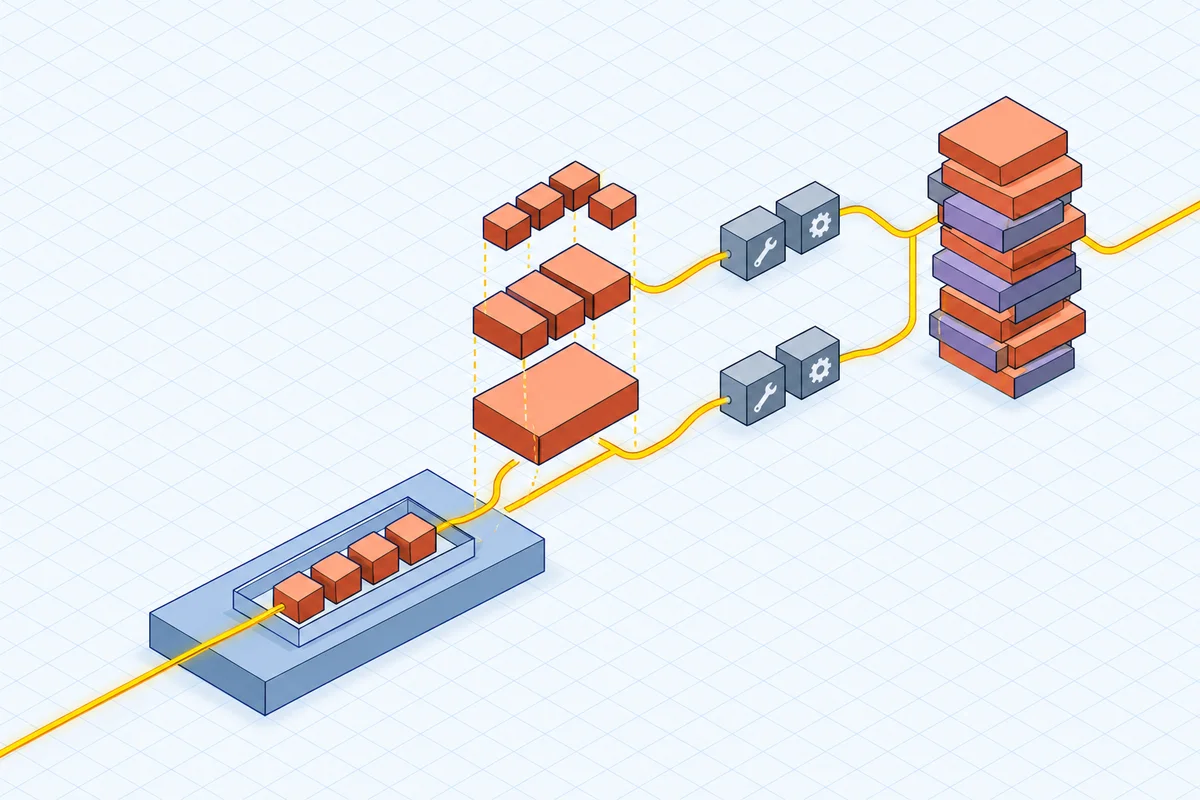
Salesforce CPQ limitations for configurable products usually appear at a specific threshold: the point where the number of valid combinations outgrows what a flat bundle structure and a list of rules can express cleanly. Below that threshold, Salesforce CPQ is a capable configure-price-quote tool that keeps quoting inside Salesforce CRM.
Salesforce CPQ models products as bundles with option groups, then layers product rules, price rules, and discount schedules on top. That design stays readable when a bundle has a few dozen options and a handful of exclusions. It gets hard to reason about when one configuration depends on three others, when options affect manufacturability rather than just eligibility, and when the rule set has grown over several years of accumulated exceptions.
The second factor is architectural. Salesforce CPQ ships as a managed package on the Salesforce platform and uses SBQQ objects. So configuration and pricing logic runs under platform constraints, including governor limits and managed-package constraints. Anything the declarative model cannot express tends to end up in Apex, flows, or the Quote Calculator Plugin. Each of those customizations becomes something you have to regression test later.
Nested bundles and multi-level structures
Nested bundles are where most teams first hit the ceiling. Real engineered products are hierarchical. An assembly contains subassemblies, which contain components, which carry their own options, quantities, and constraints. You can express that depth through nested bundles in Salesforce CPQ, but maintenance effort rises quickly with each level. The link between what the rep selected and what the factory must build is also not kept in a production-ready form. For the manufacturing side of this problem, see our guide to multi-level BOMs for manufacturers.
Product rules and price rules at volume
Product rules and price rules are easy to create and hard to retire. Over time you end up with overlapping conditions, surprises in the order rules are evaluated, and rules that only one admin fully understands. The practical symptom is change latency. A simple product update turns into a scoping exercise and a dev ticket, because nobody is confident which rules it will disturb.
Large catalogs and configuration performance
Large catalogs make both problems worse. As SKU counts, option counts, and rule volume grow, the work of configuring and calculating prices grows with them. Quote generation can slow down, and in the worst cases reps export to spreadsheets just to get a number in front of a customer. Once sales goes back to spreadsheets, the CPQ system is no longer the system of record for what was sold.
Mixed revenue on one quote
Salesforce CPQ's data model is strongest around subscriptions, contracts, and amendments. Some quotes combine equipment, installation labor, project milestones, services, and recurring revenue on a single document. Those quotes often need workarounds, custom fields, or extra tooling to express cleanly. If that describes your deals, read more about quoting products, services and subscriptions in one deal.
What Salesforce CPQ Still Does Well
Be fair to the incumbent before you replace it. Salesforce CPQ is still a reasonable fit for low to moderate configuration needs. It also suits quoting that lives entirely in the Salesforce ecosystem and businesses whose complexity sits in commercial terms rather than in product structure. Existing customers can continue to use, renew, and extend it, and support continues.
What has changed is the direction of the product. Salesforce CPQ is no longer getting meaningful new feature development, and investment has shifted to Revenue Cloud Advanced (RCA). If your configuration complexity is stable and your rule set is maintainable, staying put is a defensible decision for now. If your complexity is growing, the gap between your needs and the product's roadmap will widen rather than close.
Three Ways to Get Past Salesforce CPQ Limitations
There are three credible paths. The right one depends on where your complexity actually lives.
- Stay and contain. Audit and consolidate product rules and price rules, retire dead logic, flatten unnecessary nesting, reduce QCP dependency, and assign an owner for maintenance. This buys time, and it makes any future migration easier whichever path you choose.
- Reimplement on Revenue Cloud Advanced. Salesforce describes Revenue Management as a different architecture and data model. Treat the move as a redesign with a new attribute-based catalog, new pricing logic, and full regression testing, not a version upgrade. This path makes most sense for subscription, consumption, and hybrid revenue models that want one revenue platform owned by Salesforce.
- Keep Salesforce CRM and replace the quoting layer. If your pain is product configuration depth rather than billing or the revenue lifecycle, you can keep Salesforce CRM as the system of record and put a purpose-built configurator in front of it.
What good looks like in a configurator
Whichever path you take, evaluate every option against the same criteria:
- Depth of modeling: multi-level structures, dependency rules, and logic you can reuse across product families
- Rule maintainability: whether a trained business administrator can work with admin-configurable rules without a developer or an outside consultant
- Performance under real conditions: your largest catalog, your longest quote, and your deepest nesting
- Output fidelity: whether a validated configuration produces something manufacturing and finance can use
- Data placement: where the quote, pricing, and configuration data lives, and what has to be copied or synchronized
How Experlogix CPQ Approaches Complex Configuration in Salesforce
Experlogix CPQ is one way to keep Salesforce CRM and change only the quoting layer. It is built for the complexity threshold described above. It handles hundreds of configuration options, multi-tier pricing, BOM and routing automation, and bi-directional data flow between CPQ and CRM.
The rules engine is the core of that approach. It evaluates thousands of options and dependencies in real time. It applies four kinds of rules: product compatibility rules that capture engineering constraints, pricing and discount rules, compliance rules, and approval rules. There is no cap on how many rules you define. Guided selling steers reps toward valid configurations instead of catching errors after the quote ships. Admins maintain rules in the Admin & Design Center using low-code tools, so business users can update logic, pricing, and workflows without heavy IT involvement.
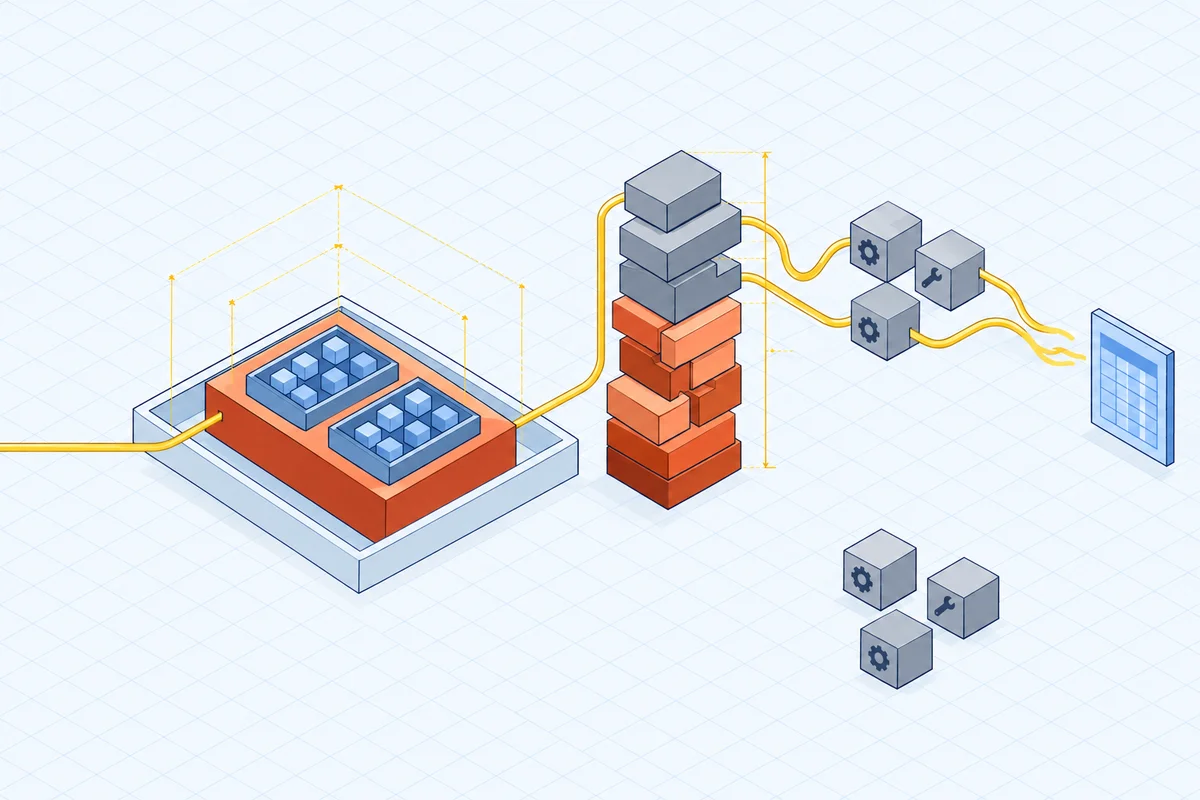
For manufacturers, the output matters as much as the configuration. Experlogix's BOM Designer models assemblies, materials, and operations as a structured hierarchy. It supports multi-level bills of materials (BOMs), nested configurations, and dependency rules. That hierarchy is stored in configuration XML that ERP systems can consume, and CRM users can see the same structure through a BOM viewer.
On the data side, Experlogix doesn't just read from Salesforce. It also writes back enriched configuration details, pricing calculations, and approval status in real time. Cloud Connect writes to standard or custom Salesforce objects without developers. It removes the middleware and point-to-point integrations that would otherwise need upkeep after every platform update. Reps configure, price, and quote inside the Salesforce interface they already use, with no separate login and no context switching.
Be honest about fit. A specialized configurator may be more than your business needs in three cases: your catalog is simple, you sell self-service SaaS, or you have already committed to a Revenue Cloud Advanced reimplementation for billing and revenue lifecycle reasons.
FAQ
What are the main Salesforce CPQ limitations for configurable products?
They come from the configuration model, not from defects. Product rules and price rules pile up and become hard to maintain. Nested bundles get expensive to model and maintain at depth. Large catalogs strain configuration performance and administration. Quotes that mix equipment, labor, projects, and recurring revenue often need workarounds. Logic the declarative model can't express tends to move into Apex, flows, or the Quote Calculator Plugin.
Why do Salesforce CPQ product rules and price rules become hard to maintain?
Rules are easy to add and hard to retire. Over years of exceptions you get overlapping conditions, surprises in evaluation order, and logic that only one admin understands. Because nobody is sure which rules a change will affect, simple product updates turn into scoping exercises and developer tickets.
How can you reduce Salesforce CPQ rule complexity before migrating?
Audit and consolidate product rules and price rules, and retire dead logic. Flatten nesting you don't need, reduce QCP customizations, and assign a clear owner for maintenance. This cleanup helps whether you stay on Salesforce CPQ, move to Revenue Cloud Advanced, or replace the quoting layer.
What should a configurator be evaluated on for complex products?
Test five things: depth of modeling for multi-level structures and reusable dependency rules, whether business administrators can maintain the rules, performance with your largest catalog and deepest nesting, whether the output is usable by manufacturing and finance, and where quote and configuration data lives. Use your hardest real quotes as the test cases, not a demo catalog.
The Bottom Line on Salesforce CPQ and Complex Products
Salesforce CPQ limitations for complex, configurable products come from design choices, not neglect. The causes are a bundle-and-rule model inside a managed package, product rules and price rules that pile up faster than they are retired, nested bundles that get expensive to maintain at depth, and large catalogs that strain both runtime performance and administration. Salesforce CPQ is still supported, renewable, and adequate for moderate complexity. It is simply not going to get deeper.
That gives you a clear decision framework:
- If your complexity is stable, contain it and keep quoting where it is.
- If you want a single Salesforce revenue platform, plan a Revenue Cloud Advanced redesign and be realistic about its scope.
- If your constraint is configuration depth, multi-level structures, mixed revenue on one quote, or manufacturing-ready output, keep Salesforce CRM as the system of record and replace the quoting layer. That solves the actual problem without disturbing the CRM your teams already use.
Teams that make this choice deliberately tend to end up with rules their own admins can maintain, configurations reps can trust, and a cleaner line between what was sold and what gets built. A practical next step: pull your three hardest real quotes from the last quarter. List the product rules, price rules, nested bundles, and QCP customizations each one touches, and use that list as the test case for every option you evaluate.
Keep Salesforce CRM as your system of record and see how Experlogix CPQ handles multi-level configurations, multi-tier pricing, and BOM and routing automation without leaving Salesforce.