If your team rebuilds renewal quotes from scratch every year, the problem usually is not your reps. More often, the prior deal's pricing, discounts, and amendments do not carry forward cleanly into the next term. For organizations running Salesforce CPQ, this shows up as manual re-keying, discount drift, and renewal quotes that no longer match what the customer actually bought. This article explains what good CPQ renewals look like, how prior pricing and discount history should move forward, and how to check whether your current quoting layer meets that bar.
TL;DR
- CPQ renewals should start from the installed base, not a blank quote. Prior pricing, negotiated discounts, amendments, and contract terms should carry forward automatically as a proposed starting point that the rep can adjust within policy.
- Salesforce CPQ supports contracted pricing, amendments, and asset-based renewals. However, the logic often depends on configuration choices, custom Quote Calculator Plugin (QCP) code, and specialist maintenance that few teams can safely change.
- Salesforce stopped selling Salesforce CPQ to new customers in March 2025. This is end of sale, not end of life. Existing customers can continue to use it, renew, add users, and receive support, and no end-of-life date has been announced. Active investment has moved to Revenue Cloud Advanced, now part of Agentforce Revenue Management. Moving there is a reimplementation, not an upgrade.
- Before you choose a platform path, audit how your renewals work today. If renewal quoting is manual, undocumented, or dependent on a consultant, define the requirement first and make the platform decision second.
Why CPQ Renewals Break Down
Most renewal problems have one root cause: the renewal quote is treated as a new quote instead of a continuation of an existing agreement. When that happens in Salesforce CPQ or any configure-price-quote (CPQ) system, every renewal becomes a reconstruction project.
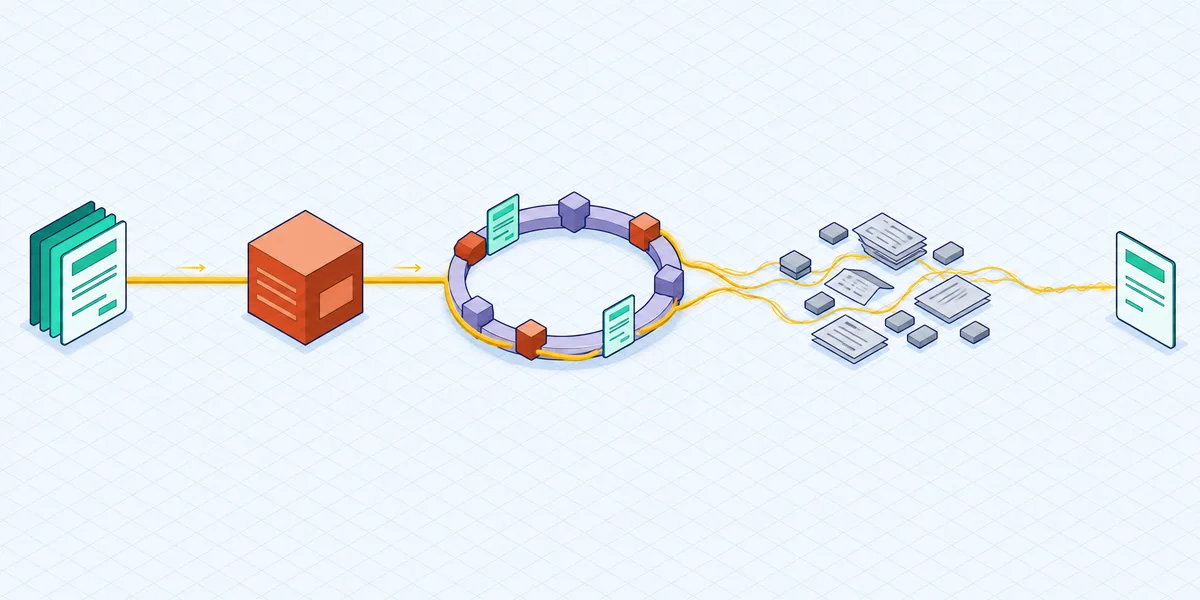
Renewal quoting depends on a chain of records. The original quote becomes an order. The order creates assets and subscriptions. Mid-term changes create amendments. The renewal should combine all of it into one accurate picture of what the customer owns today. If any link in that chain breaks, the renewal quote is wrong before a rep touches it.
Typical failure patterns look like this. The figures below are hypothetical examples.
- The customer bought at a negotiated 22 percent discount, but the renewal quote prices at list. The rep re-enters the discount from memory or a spreadsheet.
- Three mid-term amendments added seats and changed a term date, but the renewal reflects only the original order.
- The signed agreement includes a 3 percent annual uplift, but nothing in the system applies it. It gets missed or applied inconsistently.
- Co-terming and proration were handled manually last time, so this renewal's dates do not line up with the rest of the account.
Each of these is small on its own. Across a renewal book, they add up to revenue leakage, disputes, and renewal cycles that take far longer than they should.
What Carrying Forward Prior Pricing Actually Requires
Carrying prior pricing forward means the renewal quote opens already filled in with what the customer owns, what they paid, and what was agreed. Every number should trace back to its source record. Four things have to be true.
The installed base is the starting point
Asset-based renewals start from assets and subscriptions, not from the catalog. The system should read what is currently active, including quantities changed by amendments, and propose that as the renewal line set. Reps then adjust for growth or reduction instead of rebuilding from zero.
Discount history is data, not tribal knowledge
Discount history needs to live on the record. That means the discount applied, the reason for it, who approved it, and whether it was limited to one term or meant to last for the life of the agreement. Without that record, renewal pricing becomes an argument about facts rather than value. Reps re-grant discounts that were meant to be one-time, and finance cannot see the pattern until the quarter closes.
Uplift and escalation rules are governed centrally
Uplift logic belongs in pricing rules, not in a rep's notes. You might use a fixed percentage escalation, a CPI-linked adjustment, or a negotiated cap written into the contract. Whichever you use, the system should apply it automatically and show the price before and after. Governance also means guardrails: a defined floor and ceiling so renewal pricing cannot quietly drift below policy.
Amendments are reconciled, not stacked
Mid-term amendments change quantities, dates, and sometimes price. A renewal quote has to combine those changes into one current-state view. It also has to handle co-terming and proration date math correctly and show the customer a clean line-by-line comparison against the expiring term.
Where Salesforce CPQ Fits, and Where It Strains
Salesforce CPQ handles renewals well for subscription businesses of moderate complexity, and many teams run it successfully for years. It has built-in concepts for contracts, subscriptions, assets, amendments, and renewal opportunities, and contracted pricing can carry negotiated rates forward.
The strain shows up in three places.
First, the renewal behavior you want often comes from many interacting settings: renewal pricing methods, contracted price records, price rules, and the order of calculation. Changing one setting to fix one renewal scenario can change another, and regression testing across a renewal book is rarely simple.
Second, more complex renewal math often ends up in the Quote Calculator Plugin (QCP), a JavaScript customization point inside the managed package architecture. QCP code is powerful, but it is still code. It needs a developer to change it and is hard to document. It is also one of the most common sources of surprise when teams later take inventory of what they have built.
Third, Salesforce CPQ is no longer receiving meaningful new feature development. It is supported, renewable, and usable, but the renewal capability you have today is roughly the capability you will have tomorrow. That matters if your renewal model is getting more complex because you now sell hardware, services, labor, subscriptions, and usage together.
Your Three Realistic Paths
There are three realistic options. The right one depends on how much renewal complexity you carry.
- Stay on Salesforce CPQ and improve the process. This is reasonable if your renewals are mostly like-for-like subscription renewals, your QCP footprint is small, and your admins can maintain the configuration. You keep support and renewal rights. Your effort goes into data hygiene and documented pricing policy instead of a platform project.
- Reimplement on Revenue Cloud Advanced. This is reasonable if you want to stay entirely within Salesforce's roadmap and are prepared for a redesign. The data model and configuration approach differ from Salesforce CPQ. Plan it as a new implementation with full renewal reconciliation testing, not a version upgrade.
- Keep Salesforce CRM and replace the quoting layer. This is reasonable if Salesforce CRM works well as your system of record but your quoting and renewal logic has outgrown the managed package. That is most likely when configurable products and mixed revenue streams are involved.
None of these paths is automatically right. A company with a clean catalog and simple annual renewals should think hard before starting any migration.
How Experlogix CPQ Approaches Renewal Pricing and Discount Control
Experlogix CPQ is one example of the third path: keep Salesforce CRM as the system of record and replace the quoting layer. Experlogix CPQ integrates natively with Salesforce CRM and runs inside the Salesforce workflow. Reps configure, price, and quote in the account and opportunity context they already use.
Several Experlogix CPQ capabilities are relevant to the renewal problem:
- Pricing logic for every scenario. You can configure list, contract, and tiered pricing structures. Region-specific rules, currency conversions, and volume-based breaks apply automatically. Contract pricing structures give you a foundation for honoring previously negotiated rates.
- Discount stacking with guardrails. Ceilings, floors, and stacking rules control how multiple discounts combine, so renewal discounting stays inside policy. Standard deals go through without extra steps, and approvals trigger only when a deal crosses a threshold.
- Threshold-based approval routing. Pricing and discount rules are evaluated in real time during configuration. Exceptions route automatically to the right approvers, and every pricing decision is logged. That log turns discount history into something finance can actually review.
- Special pricing agreement (SPA) management. The right agreement is applied automatically in concert with your CRM, and each quote records which agreement it used. The resulting audit trail reduces pricing disputes.
- Mixed revenue on a single quote. One-time equipment, recurring subscriptions, usage-based fees, and multi-year services and support can sit on one quote. Each keeps its own tiers, contract terms, and regional rules, and margin stays visible for the whole bundle and for each line. This matters at renewal when the expiring agreement covers more than subscriptions.
- Low-code administration. Business users can maintain pricing and rule logic with a low-code rule builder instead of filing a development ticket each time a renewal policy changes.
These capabilities govern how renewal pricing is calculated, discounted, and approved. During any evaluation, confirm how your installed-base, asset, and amendment data will be sourced into the renewal quote. That part of the requirement is specific to your environment.
Experlogix is not the right answer for everyone. If your catalog is simple, your renewals are like-for-like, or you are already committed to a Revenue Cloud Advanced reimplementation, the renewal gains alone may not justify the cost of changing quoting layers.
FAQ
How can CPQ preserve pricing and discount history at renewal?
Store pricing and discount history as data on the record: the discount applied, the reason, who approved it, and whether it was one-time or meant to last for the life of the agreement. The renewal quote should then propose prior negotiated rates as the starting point. Floors, ceilings, and approval thresholds keep any changes within policy, and a logged approval trail lets finance see discount patterns before they become precedent.
How are prior pricing, discounts, assets, amendments and renewal terms carried forward?
A well-designed renewal reads the customer's current state from the chain of records: the original quote, the resulting order, the assets and subscriptions it created, and any mid-term amendments. It combines these into one current-state view, applies contracted pricing and agreed discounts, applies uplift rules from the contract, and handles co-terming and proration. The rep then reviews and adjusts instead of rebuilding.
What is an asset-based renewal?
An asset-based renewal builds the renewal quote from the assets and subscriptions a customer currently owns, not from the product catalog. It includes quantities changed by amendments, so the proposed renewal line set reflects what is actually active today.
How should uplift be applied to CPQ renewals?
Uplift should live in centrally governed pricing rules, not in a rep's notes. Whether you use a fixed percentage escalation, a CPI-linked adjustment, or a negotiated cap from the contract, the system should apply it automatically, show the before-and-after price, and enforce a floor and ceiling so renewal pricing cannot drift below policy.
The Bottom Line on CPQ Renewals
CPQ renewals should start from the customer's current state and carry prior pricing, discount history, uplift terms, and amendments forward automatically. When they do, renewal quoting becomes a short review instead of a reconstruction. Finance can see discount patterns before they become precedent. Customers get a renewal document that matches what they actually bought, which is the kind of quote-to-contract consistency that prevents disputes.
The requirement question comes before the platform question. Salesforce CPQ remains supported and renewable, with no announced end-of-life date, so you are not under time pressure. Revenue Cloud Advanced is a legitimate path if you plan it as a redesign. Keeping Salesforce CRM and replacing the quoting layer is a legitimate path if your renewal and configuration complexity has outgrown the managed package. Whichever path you choose, do not carry an undocumented renewal process into it.
A practical next step: pull your last twenty renewal quotes and trace each one backward. For every line, find where the price came from, where the discount came from, whether an uplift was applied, and whether any amendment was reflected. Anything you cannot trace to a system record is a requirement to write down before you evaluate a single platform.
Make Every Renewal Quote Start From What Was Agreed