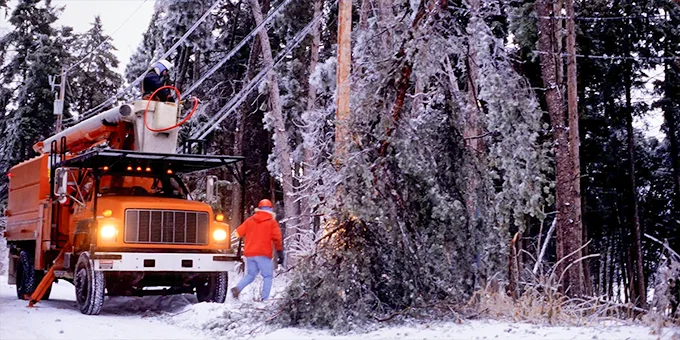
It’s 6 AM, and a utility customer just called about storm damage across three districts. Your estimating lead opens a spreadsheet; it’s the same one that handles routine right-of-way clearing, commercial pruning bids, and municipal program renewals. She needs to build a quote that accounts for surge pricing, standby crews, mobilization costs, district-specific labor rates, and emergency travel rules.
None of those fields exist in the template. So she builds them from scratch.
Again.
Sound familiar?
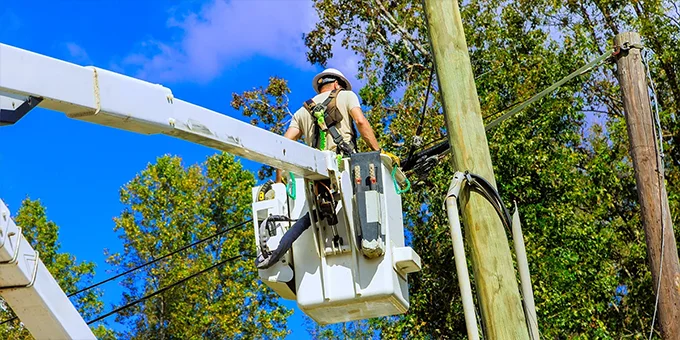
For tree care and vegetation management companies operating at scale, this is part of the daily workflow.
The only problem is that it’s an inefficient and error-prone process.
Utility Vegetation Management: Why invest in CPQ?
There are a lot of reasons your quoting process can break as your business scales. Here are just a few that the UVM industry faces.
Pricing Complexity That Compounds Fast
A single vegetation management proposal can involve unit rates per tree or per mile, time-and-materials for unpredictable scope, fixed bids for program work, not-to-exceed caps, and contingency adders for storm events.
Now layer in:
- Crew composition variables (climbers, bucket operators, flaggers, ground crew),
- Equipment availability by branch
- Union or prevailing wage rules
- Regulatory compliance
- Travel and per diem
- Disposal logistics
- Customer-specific rate cards
- And much more.
The good news is that companies with this level of service and pricing complexity have the most to gain from CPQ (Configure, Price, Quote) software. Not all CPQ solutions are created equal, though.
Basic configuration tools break under high volume and high complexity environments.
For example, let’s look at a few areas where lightweight CPQ is likely to fall short.
Compliance paperwork that affects the quote.
Compliance standards like NERC FAC-003 require utility companies to plan and document the strategies used to prevent line failure. Which means compliance isn’t just a field ops concern. It’s a quoting variable. It’s also the kind where any error can lead delays and higher quoting costs due to revisions and rework.
Scope that moves.
The industry has outgrown fixed trimming cycles to risk-based vegetation management; using analytics and AI, companies can now prioritize work by asset criticality, vegetation proximity, outage history and numerous other factors. This strategy is excellent for operations, but it makes quoting more complex.
Labor rates that won’t sit still.
Prevailing wage requirements on public and utility work mean labor rates vary by jurisdiction, by trade classification, and by contract type. They also change. Sometimes mid-year. Add the broader skilled labor crunch on top of that (over half of commercial landscape and tree care contractors flagged retention as a top business risk heading into 2026, and most planned wage increases). Keeping rate tables current in a spreadsheet that ten people touch is a recipe for bad data. Inconsistency in the process also makes it difficult for new team members to learn the ropes.
Margin that varies by service type…inside the same quote.
Tree removal, pruning, stump grinding, plant health care, and emergency response all carry different margin profiles. Emergency work can run significantly higher than routine pruning. So, when you’re quoting a bundled service package for a commercial portfolio or municipal contract, you’re not applying a single markup, you’re managing blended margin targets that shift with service mix. That math works fine in someone’s head when they’re quoting three jobs a week. It stops working when they’re quoting thirty, or when someone else needs to do the quoting.
Wildfire and liability costs that have to land somewhere.
In the western United States especially, wildfire risk is reshaping the cost structure of vegetation management contracts. Extra costs from rising insurance premiums and tightening liability laws means that many companies have had to adjust their strategies.
Some of these costs can be passed through as quote-level adders or surcharges. Others just get absorbed into overhead and quietly eat margin. Either way, the pricing model and quoting process has to account for risk factors that change dramatically over time.
When Spreadsheets Stop Adding Up
Spreadsheets don’t fail all at once.
A small number of errors creep in. As inaccuracy grows, the first thing you notice is rework. For example, a quote goes out with the wrong labor rate because someone referenced last year’s tab and has to be redone.
Errors like these may seem small but compound them across thousands of work orders and the pattern is hard to miss: manual quoting creates margin leakage that stays invisible until someone checks.
Then there’s speed. When it teams spend more time assembling quotes than evaluating whether those quotes are profitable, less valuable deals eat away at margin.
And then it’s important to consider pricing governance. Who approved that discount? Why did margin fall below the floor? Was customer-specific pricing applied correctly? In a spreadsheet, the answer is always “let me check.”
In an industrial-grade CPQ system, the answer is already documented.
What Drives CPQ Fit Here
Not every tree care company needs robust quoting automation. A two-crew operation running residential removals can likely get by with spreadsheets or a basic configurator tool in a CRM.
But when enough of these signals show up in the same business, you’re looking at complexity that spreadsheets and lightweight CPQ solutions weren’t designed to manage:
- Multiple pricing models in the same deal. (unit, T&M, fixed, NTE, contingency)
- Multi-branch or multi-region operations with different labor rates, equipment pools, and travel rules
- Service bundling where margin varies by service type (vegetation management, herbicide, inspection, emergency response, disposal, plant health care)
- Contract complexity, such as: customer-specific price books, SLA penalties, escalation clauses, evergreen MSAs)
- Crew-based estimating where the right assembly depends on work type, contract, and region.
- Compliance deliverables baked into the quote: NERC documentation, OSHA requirements, traffic control plans, clearance certifications
- Variable scope driven by risk-based prioritization
- Approval workflows for discounts, margin exceptions, storm surcharges, prevailing wage overrides
- High quote volume with thousands of work orders and change orders a year
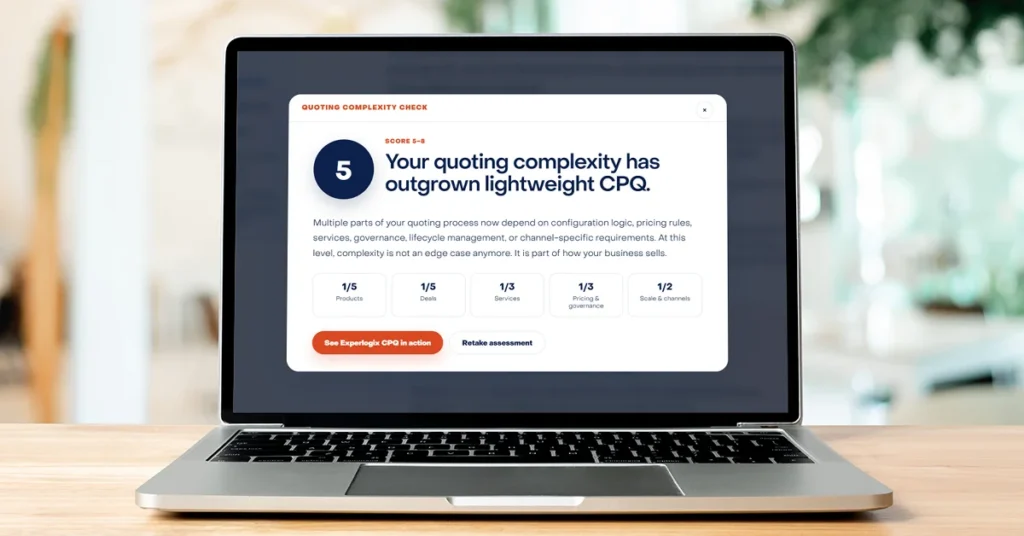
Five or more of these in one business usually means the current system is costing a lot and cutting into efficiency.
It’s a Configuration Problem.
The gap between what gets sold and what those systems can actually enforce is where revenue disappears into the ether.
Rate books live in spreadsheets. Crew assemblies live in people’s heads. Approval logic lives in email chains. Proposal templates live in shared drives with seven versions and no clear owner.
What’s missing is a configuration layer. Something that codifies pricing rules, customer-specific terms, compliance requirements, and approval thresholds.
That’s what CPQ software does. For tree care and vegetation management companies running complex quoting across branches, it’s the layer that takes what your best estimator knows and makes it available to everyone.
Quoting Questions Worth Asking
If you want to gut-check where you stand, a few questions tend to make it clear:
- How many pricing models does your team juggle in a given week?
- How often do quotes require rework because scope, rates, or terms were wrong?
- Where does the actual source of truth for pricing live?
- How many people know how to use it?
- When a quote needs approval, how long does that take?
- When labor rates or scope changes, how quickly does your quoting process absorb the update?
The answers will give you a clear read on whether you’ve outgrown your current tools, and how fast the efficiency gap is widening.