How Manufacturers Connect Sales, Engineering, Pricing, and Production
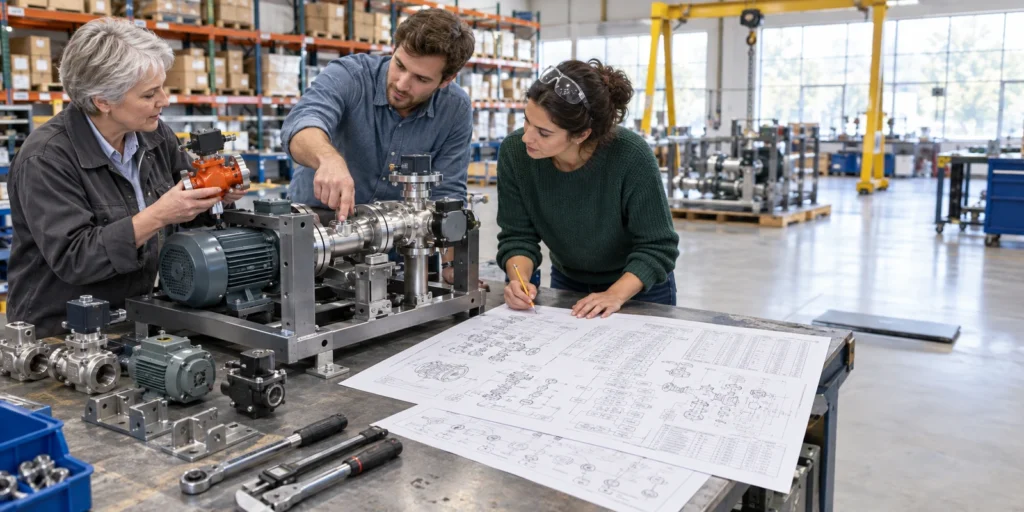
Manufacturers do not simply quote products.
They quote combinations of components, dimensions, materials, performance requirements, services, regional standards, production processes, and customer-specific terms.
A single product family may include:- Hundreds or thousands of valid options
- Multi-level assemblies
- Required and optional components
- Material dependencies
- Capacity and performance calculations
- Regional voltage or safety requirements
- Customer-specific pricing
- Installation and maintenance services
- Production routings
- Bills of materials
- Engineered exceptions
That complexity is difficult to manage through spreadsheets, static price books, or product knowledge held by a few experienced employees.
Experlogix CPQ helps manufacturers configure, price, approve, and quote complex products using governed engineering and commercial rules.
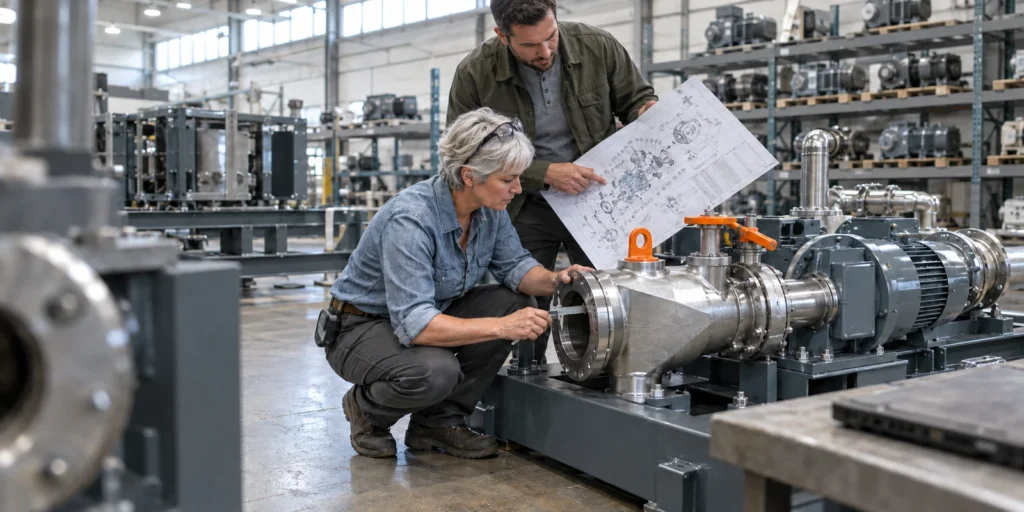
For products that fall within the approved configuration model, CPQ can help sellers create technically valid, commercially accurate, and production-ready orders without requiring engineering to review every routine quote.
For true engineer-to-order exceptions, CPQ can identify when a request falls outside the established model and route it to the appropriate technical team.
The goal is not to eliminate engineering from the sales process. It is to keep engineers focused on genuinely custom work instead of repeatedly validating combinations the business has already approved.
What Is CPQ for Manufacturing?
Manufacturing CPQ is Configure, Price, Quote software designed to support complex product configuration and the transition from customer requirements to production.
It combines several capabilities:Configure
Guide users through product selection and apply engineering rules to determine which components, options, and services form a valid solution.
Price
Calculate prices using product, customer, cost, volume, channel, regional, and margin rules.
Quote
Create an accurate commercial offer containing the approved configuration, pricing, terms, and supporting documentation.
Prepare for Production
Translate the approved configuration into structured information such as:
- Bills of materials
- Work breakdown structures
- Routings
- Component lists
- Labor requirements
- Technical specifications
- ERP-ready order data
This final stage is what separates industrial manufacturing CPQ from a basic quote generator.
The quote is not only a customer-facing document. It becomes a structured definition of what the manufacturer has agreed to build and deliver.
Learn more about Experlogix CPQ for manufacturing.
Which Manufacturing Models Use CPQ?
CPQ can support several manufacturing models, but the role of the configurator differs between them.
Standard Products
Standard products have fixed SKUs and limited variation.
CPQ may still help manage:- Product bundles
- Quantity pricing
- Customer-specific prices
- Accessories
- Diensten
- Goedkeuringen
- Channel sales
However, the greatest value usually appears when products contain more configuration complexity.
Assemble-to-Order
Assemble-to-order products are created from predefined components or modules.
The finished configuration may not exist as a stocked item, but its components and valid combinations are known.
CPQ can:- Guide component selection
- Enforce dependencies
- Calculate quantities
- Apply pricing
- Produce the relevant order structure
Configure-to-Order
Configure-to-order products use predefined product models and engineering rules to create a customer-specific result.
Examples may include:- Different dimensions
- Motors
- Materials
- Finishes
- Controls
- Capacities
- Accessories
- Electrical standards
- Service packages
For configure-to-order products, CPQ can often validate the complete configuration without routine engineering review because the acceptable combinations are already modeled.
Engineer-to-Order
Engineer-to-order products contain requirements that cannot always be fully predetermined.
The opportunity may require:- New calculations
- New components
- Structural analysis
- Application engineering
- Custom drawings
- Regulatory review
- Technical feasibility analysis
- New production methods
CPQ can still add significant value.
It can configure and price the repeatable portion of the solution, identify where the request falls outside approved rules, collect the necessary technical information, and route the exception to engineering.
Once a custom decision becomes repeatable, it may later be added to the product model.
This creates a better division of labor:- CPQ handles known rules and standard variation.
- Engineering handles genuinely new requirements.
- Approved new knowledge can be incorporated into future configurations.
Mixed-Mode Manufacturing
Many manufacturers sell a combination of:- Standard products
- Configured products
- Custom-engineered elements
- Installation
- Training
- Support
- Maintenance
- Spare parts
- Subscriptions or monitoring services
A strong CPQ process can bring these different commercial elements into one quote while applying the correct rules to each.
Why Manual Manufacturing Quotes Break Down
Product Complexity Outgrows Human Memory
A salesperson may need to understand how selections affect:- Dimensions
- Materials
- Motors
- Drives
- Electrical systems
- Capacity
- Pressure
- Temperature
- Safety requirements
- Component availability
- Certifications
- Manufacturing methods
One choice can create a chain of dependencies across the rest of the product.
A motor may require a specific drive. The drive may change electrical requirements. The voltage may change the enclosure. The destination country may require different safety components and certification.
A spreadsheet can list available options. It cannot reliably enforce thousands of interacting rules without becoming difficult to understand and maintain.
Experienced Employees Become Quoting Bottlenecks
When product logic is not built into the quoting process, sellers depend on senior employees to answer routine questions.
Engineering or product specialists may repeatedly confirm:- Whether a configuration is possible
- Which components are required
- Which material should be used
- Whether capacity requirements can be met
- Whether a product complies with regional standards
- How much custom work is required
This consumes engineering capacity and slows customer response times.
Pricing Becomes Disconnected From Cost
Manufacturing prices may depend on:- Material costs
- Labor
- Machine time
- Component costs
- Customer agreements
- Distributor tiers
- Volume
- Region
- Currency
- Freight
- Product options
- Lead time
- Margin requirements
When sellers rely on static spreadsheets or exported price lists, a change in cost may not reach the quote quickly enough.
The company may win the order while unknowingly accepting an unacceptable margin.
Invalid Quotes Reach Engineering or Production
Configuration errors may not be discovered until:- Engineering reviews the order
- Purchasing attempts to source components
- A bill of materials is created
- Production planning begins
- The shop floor starts the build
- The customer asks for clarification
- Requoting
- New customer approval
- Engineering changes
- Material substitutions
- Schedule changes
- Expedited purchasing
- Production rework
The cost of an error rises as it moves downstream.
Sales and Production Use Different Product Definitions
Sales may quote from:- A spreadsheet
- A catalog
- An old proposal
- A CRM product list
- A locally maintained configurator
- ERP items
- Engineering bills of materials
- Manufacturing bills of materials
- Routings
- Drawings
- Work instructions
When those definitions are not connected, operations must translate what sales sold into what the factory can produce.
That translation layer is where errors, delays, and margin drift often appear.
How Manufacturing CPQ Works
1. Capture the Customer’s Requirements
The process can begin with questions that describe what the customer needs rather than asking the seller to choose components immediately.
Questions may cover:- Required output
- Capacity
- Size
- Dimensions
- Operating environment
- Input materials
- Temperature
- Pressure
- Voltage
- Destination country
- Available space
- Compliance standards
- Installation requirements
- Maintenance needs
- Delivery timing
The answers can guide the user toward suitable product families, assemblies, and options.
This guided-selling approach helps less-experienced sellers navigate complex products without memorizing the complete catalog.
2. Apply Engineering and Product Rules
De Experlogix CPQ Rules Engine evaluates product selections as the configuration develops.
Rules can:- Require components
- Prevent incompatible options
- Calculate dependent quantities
- Set minimum or maximum values
- Restrict choices by region
- Enforce material compatibility
- Apply technical calculations
- Select appropriate subassemblies
- Add safety components
- Require services
- Identify engineering exceptions
The rules reflect approved product and engineering knowledge.
For example:- Selecting a larger motor may require a different drive.
- A corrosive environment may require a specific material.
- A particular voltage may restrict available control systems.
- A capacity requirement may determine the equipment size.
- A destination country may require different electrical and safety components.
- Selecting one enclosure may make certain accessories unavailable.
The system prevents invalid combinations before they become customer commitments.
3. Distinguish Standard Variations From Engineering Exceptions
Not every request should be forced through an automated configuration model.
The CPQ process should recognize three categories:Valid Standard Configuration
The request falls completely within established rules and can continue without engineering review.
Valid Configuration Requiring Approval
The product can be built, but a condition requires review.Examples include:
- Unusual lead time
- Low margin
- Nonstandard warranty
- Special certification
- Significant discount
- Unusual service commitment
Engineering Exception
The request includes a requirement outside the approved product model. Examples include:
- A new component
- An unsupported performance range
- A new material
- A structural change
- An untested application
- A custom production method
The system can collect the relevant requirements and route the opportunity to engineering.
This is more accurate than promising that CPQ can guarantee every engineer-to-order request is buildable without technical review.
4. Apply Current Pricing and Cost Logic
Manufacturing pricing can be calculated from several sources and methods.
Experlogix CPQ Pricing and Discounts can support pricing structures such as:- List pricing
- Customer-specific pricing
- Contract pricing
- Distributor pricing
- Volume breaks
- Tiered pricing
- Regional pricing
- Multi-currency pricing
- Cost-plus pricing
- Markup rules
- Promotional pricing
- Bundle pricing
- Discount floors and ceilings
- Margin thresholds
The system can also account for how configuration choices change cost.
For example:- A larger size may require more material.
- A selected component may change labor requirements.
- A custom finish may add setup cost.
- A regional certification may add testing expense.
- An accelerated delivery schedule may require a premium.
- A selected option may change the routing or production time.
The purpose is not merely to produce a price faster.
It is to ensure the price reflects the configured product and the organization’s current commercial policies.
5. Route Pricing and Technical Exceptions
Manufacturing quotes may require review from:- Sales management
- Pricing
- Finance
- Engineering
- Wettelijk
- Operations
- Executive leadership
Experlogix CPQ Approvals and Governance can route quotes according to predefined conditions.
Approval rules may consider:- Discount
- Margin
- Deal value
- Product family
- Customer
- Region
- Lead time
- Warranty
- Payment terms
- Engineering exception
- Service commitment
- Custom component
Routine transactions can move forward without unnecessary delay, while commercial and technical exceptions receive the appropriate review.
The approval history also remains connected to the quote instead of being scattered across email and chat messages.
6. Show the Customer What Is Being Configured
Complex products are difficult to understand from line-item descriptions alone.
Experlogix CPQ 2D and 3D Visualization can update the product representation as selections change.
Visualization may help customers and sellers understand:- Dimensions
- Components
- Layout
- Colors
- Materials
- Accessories
- Product orientation
- Selected options
- Compatibility
This reduces ambiguity between what the customer expects and what the manufacturer intends to produce.
Visualization does not replace technical drawings or engineering documentation where those are required. It provides clearer feedback during the sales and configuration process.
7. Generate the Customer Quote
The approved configuration and pricing data can be used to create documents such as:- Quotes
- Proposals
- Product summaries
- Technical specifications
- Configuration schedules
- Scope documents
- Terms and conditions
- Option lists
- Supporting diagrams
The customer-facing document should use the same approved data that will later be passed to operations.
For more advanced document-generation requirements, Experlogix Document Automation can create governed documents using data from CRM, CPQ, ERP, and other connected systems.
8. Generate Bills of Materials and Routings
Once the product has been validated, the configuration can be translated into production structures.
A bill of materials may contain:- Finished product
- Parent assemblies
- Subassemblies
- Components
- Quantities
- Materials
- Purchased parts
- Manufactured parts
- Operations
- Work centers
- Sequence
- Setup time
- Run time
- Tooling
- Inspection points
- Labor requirements
Experlogix CPQ BOM and ERP Handoff can generate BOM, WBS, routing, and related production information from the same rules used during quoting.
This creates a stronger connection between:- What sales configured
- What the customer approved
- What engineering validated
- What operations must build
9. Transfer the Approved Order to ERP
The accepted quote may need to pass structured data into ERP, including:- Customer
- Order header
- Producten
- Quantities
- Prices
- Discounts
- Configuration identifiers
- BOM
- Routing
- Work breakdown structure
- Production instructions
- Requested delivery date
- Supporting documents
This does not always mean that CRM quote lines are copied directly into ERP.
The CPQ configuration may need to:- Expand one customer-facing line into multiple components
- Group several selections into one assembly
- Translate CPQ identifiers into ERP item numbers
- Create a configured item
- Generate a production order
- Apply ERP-specific data structures
- Trigger another validation step
The important point is that the transformation is governed and repeatable.
Operations should not need to rebuild the order manually from a PDF or interpret free-form sales notes.
Learn more about Experlogix CPQ integrations.
10. Keep CRM, CPQ, and ERP Aligned
Different systems may remain authoritative for different information.
A typical ownership model might look like this:- CRM owns accounts, contacts, opportunities, and sales activity.
- CPQ owns configuration logic, quote configurations, and guided-selling rules.
- ERP owns product items, costs, inventory, orders, and financial transactions.
- PLM may own engineering designs and product lifecycle information.
- PIM may own product descriptions and marketing attributes.
The correct architecture depends on the manufacturer.
The objective is not to copy every piece of information into every system. It is to define:- Which system owns each data type
- Which systems need access to it
- How often the information changes
- Whether it must be retrieved in real time
- How updates are synchronized
- How errors are identified and corrected
Experlogix provides native CPQ capabilities for the Microsoft Dynamics 365 ecosystem, including:
- Microsoft Dynamics 365 overview
- Dynamics 365 Finance and Supply Chain Management
- Dynamics 365 Business Central
- Dynamics 365 Sales
Experlogix also provides embedded CPQ for Salesforce.
The exact ERP and CRM fit should be validated against the manufacturer’s current systems, versions, data requirements, and desired workflows.
CPQ for Dealers, Distributors, and Customer Self-Service
Manufacturers may sell through:
- Direct sales teams
- Dealers
- Distributeurs
- Agents
- OEM partners
- Customer portals
- Producten
- Prices
- Discounts
- Territories
- Currencies
- Languages
- Permissions
- Approval rules
The same core configuration logic can be made available to internal and external users while controlling which options and prices each audience can access.
A dealer should not need to call the factory every time a customer requests a common configuration.
At the same time, the manufacturer should not expose every internal cost, rule, or product option.
De Experlogix CPQ Customer Portal can extend guided configuration and ordering to B2B customers and channel partners.
Managing Product and Rule Changes
Manufacturing product models do not remain static.
They change because of:
- New components
- Retired components
- Supplier changes
- Cost changes
- Engineering improvements
- New regulations
- Regional expansion
- New service offerings
- Product-line consolidation
- Manufacturing-process changes
The CPQ environment therefore needs clear ownership and governance.
Manufacturers should define:
- Who owns product rules
- Who approves engineering changes
- Who maintains pricing
- Who tests changes
- Who publishes updates
- How versions are controlled
- How active quotes are affected
- How retired configurations are handled
- How ERP and CRM mappings are updated
De Experlogix CPQ Admin and Design Center provides low-code tools for managing configuration rules, pricing logic, and workflows while supporting role-based governance.
How to Measure Manufacturing CPQ Results
The value of CPQ should be measured across sales, engineering, and production.
Quoting Performance
- Average quote preparation time
- Median quote preparation time
- Approval turnaround time
- Number of quotes produced per seller
- Quote revision rate
- Customer response time
Configuration Accuracy
- Number of invalid configurations
- Number of engineering rejections
- Number of missing components
- Number of production changes caused by quoting errors
- Number of customer corrections
- Number of returned or reworked orders
Engineering Capacity
- Engineering hours spent validating standard quotes
- Number of quotes requiring engineering review
- Time spent maintaining spreadsheets
- Percentage of quotes completed without specialist intervention
- Time required to add new product options
Pricing and Margin
- Pricing override frequency
- Average discount
- Margin by product family
- Number of below-margin quotes
- Approval frequency
- Difference between quoted and actual cost
Quote-to-Production Performance
- Time from quote acceptance to order creation
- Time from acceptance to production release
- BOM preparation time
- Routing preparation time
- Number of manual handoffs
- Number of ERP orders requiring correction
- Time spent re-entering quote information
Channel Performance
- Dealer quote turnaround
- Partner adoption
- Number of factory consultations per dealer quote
- Self-service order volume
- Configuration errors by channel
- Training time for new dealers
Customer Examples
Wenger Manufacturing Cuts Quote-to-Production Time in Half
Wenger Manufacturing builds extrusion systems for food and feed production. Its equipment is heavily configured, and the company rarely builds the same machine twice.
Experlogix CPQ helps Wenger configure equipment and generate the documentation needed to complete an order. Wenger reduced the time required to move an order into production from two months to one month.
Read the Wenger Manufacturing case study.
Okuma Automates BOM and Manufacturing Order Creation
Okuma America manufactures CNC machine tools and sells through a dealer network.
The company uses Experlogix CPQ to improve quote accuracy, maintain configuration data integrity, automate bills of materials and manufacturing orders, and provide better visibility into what dealers and sales representatives are selling.
Read the Okuma America case study.
Thermo Fisher Scientific Configures Complex Microscopes
Thermo Fisher Scientific uses Experlogix CPQ to configure complex scientific instruments while supporting multi-currency quoting, discount approvals, manufacturing planning, and Microsoft Dynamics CRM integration.
The company reported producing orders in a fraction of the time previously required while reducing reliance on spreadsheets and disconnected tools.
Read the Thermo Fisher Scientific case study.
INNOTEX Connects Dealer Configuration With Production
INNOTEX manufactures customized protective clothing for firefighters.
Experlogix CPQ allows dealers to configure tailored orders while preventing incompatible option selections. Approved orders move through CRM and ERP to generate manufacturing orders and routings for the production floor.
Read the INNOTEX case study.
Questions to Answer Before Implementing Manufacturing CPQ
Product Structure
- Which products are standard, configured, and engineered?
- Which options and components are repeatable?
- Which dependencies are documented?
- Which rules currently exist only as tribal knowledge?
- Which combinations require engineering review?
- How are legacy products handled?
Pricing
- Where are costs maintained?
- Which system owns customer pricing?
- How are volume and channel discounts calculated?
- How often do material costs change?
- Which conditions require approval?
- How are regional and currency differences handled?
Engineering
- Which technical calculations can be automated?
- Which requests must remain engineer-reviewed?
- How are exceptions documented?
- Who approves new configuration rules?
- How are engineering changes tested?
Production
- What information does ERP need?
- Does the order require a BOM?
- Does it require routings or work instructions?
- How are configured item numbers created?
- Which information must reach purchasing?
- Which data must reach the shop floor?
Systems
- Where does the quote begin?
- Which data comes from CRM?
- Which data comes from ERP?
- Is PLM or PIM involved?
- Which information must be real time?
- How are integration failures handled?
- How are quote and order versions reconciled?
Channels
- Will dealers or distributors use the configurator?
- Which products can each channel sell?
- Which prices can they see?
- Can customers configure products directly?
- Which transactions require internal approval?
Governance
- Who maintains the product model?
- Who maintains pricing?
- Who owns CPQ administration?
- How are updates tested?
- How are changes released?
- How are users trained?
Common Manufacturing CPQ Mistakes
Promising That Every Configuration Is Automatically Buildable
CPQ can validate the scenarios represented by its product and engineering rules.
A truly new engineer-to-order request may still require technical review.
The system should identify exceptions rather than approving requirements it has not been designed to evaluate.
Recreating a Spreadsheet Inside CPQ
A complicated spreadsheet is not automatically a good product model.
Implementation should simplify and organize the rules before automating them.
Modeling the Entire Catalog Before Launch
Trying to include every product, market, channel, and exception in the first release can delay value.
A focused initial product family allows the team to prove the model, integration, testing, and governance process.
Ignoring ERP Handoff Until the End
BOM, routing, item, and order requirements influence how the configuration model should be structured.
Production handoff should be designed during discovery, not immediately before launch.
Importing Poor Product Data
Duplicate parts, outdated items, inconsistent descriptions, and unclear ownership will undermine the CPQ model.
Data preparation is part of implementation.
Automating Every Historical Exception
A one-time custom order does not necessarily deserve a permanent product rule.
The team should distinguish repeatable business logic from unusual historical transactions.
Testing Only Valid Configurations
Testing should also include:- Invalid combinations
- Missing components
- Pricing exceptions
- Regional variants
- Approval paths
- ERP failures
- Quote revisions
- Legacy products
- Engineering exceptions
Failing to Assign Long-Term Ownership
Products, costs, rules, and production methods will continue changing after launch.
The manufacturer needs a defined CPQ owner and governance process.
Veelgestelde vragen
What is CPQ for manufacturing?
CPQ for manufacturing is software that guides product configuration, calculates pricing, creates quotes, and prepares validated order information for engineering, ERP, and production processes.
Can CPQ prevent unbuildable product configurations?
CPQ can prevent configurations that violate the engineering and product rules modeled in the system. Requests outside the approved model can be identified and routed for engineering review.
What is the difference between configure-to-order and engineer-to-order CPQ?
Configure-to-order CPQ uses predefined options and rules to create valid product variations. Engineer-to-order CPQ also supports the repeatable portion of the product but may route genuinely new requirements to engineering for technical design and approval.
Can CPQ generate a bill of materials?
Yes. Experlogix CPQ can generate multi-level bills of materials from a validated configuration. Learn more about BOM and ERP handoff.
Can CPQ generate manufacturing routings?
Yes. Experlogix CPQ can generate routing information based on the configured product and pass structured information into supported ERP workflows.
Does CPQ replace ERP?
No. CPQ manages product configuration, pricing, approvals, and quoting. ERP generally remains responsible for orders, inventory, purchasing, production, fulfillment, and financial transactions.
Does CPQ replace PLM?
No. PLM typically manages engineering designs, product lifecycle data, revisions, and change processes. CPQ uses approved product and engineering logic to support sales configuration and quoting.
Can CPQ use current ERP costs?
CPQ can reference connected ERP cost and product data when the integration is designed to provide it. The exact data flow depends on the ERP, data ownership, and implementation architecture.
Can dealers and distributors use manufacturing CPQ?
Yes. Manufacturers can provide governed configuration and quoting experiences to dealers and distributors while controlling product access, pricing, permissions, and approval rules.
Can CPQ support regional product differences?
Yes. Rules can limit available components and options based on factors such as destination, voltage, certification, language, currency, or regional product availability.
Can CPQ include installation and maintenance services?
Yes. Products, installation, training, support, maintenance, warranties, and other services can be configured and priced as part of the complete offer.
How should manufacturers measure CPQ ROI?
Manufacturers can measure quote time, configuration errors, engineering review time, pricing accuracy, margin, BOM preparation time, ERP corrections, and the time between quote acceptance and production release.
Connect Complex Quoting With Production
Manufacturing CPQ is not simply a faster way to create a quote document. It connects customer requirements, product configuration, engineering rules, pricing, approvals, bills of materials, routings, ERP orders, and production.