If you administer Salesforce CPQ today, you already know which changes you can make yourself and which ones require a developer, a consultant, or a release window. With Salesforce CPQ now end of sale and feature development effectively paused, that split matters more than it used to. This article looks at what day-to-day administration actually involves, and what a Salesforce CPQ admin should expect to be able to do on day one with an admin-configurable quoting layer.
TL;DR
- Salesforce stopped selling Salesforce CPQ to new customers in March 2025. This is end of sale, not end of life: existing customers can keep using it, renew, add users, and receive support, and no end-of-life date has been announced.
- The practical problem for the Salesforce CPQ admin is not access. It is change velocity: managed package architecture, layered product and price rules, and Quote Calculator Plugin (QCP) customizations mean many routine changes need specialist help.
- A useful evaluation question for any replacement is simple: on day one, which changes can an admin make, preview, and deploy without writing code?
- Experlogix CPQ addresses this with a low-code Admin and Design Center where business admins model products, services, configuration rules, pricing logic, and approval workflows, preview the impact, and deploy without code, with role-based permissions and version control over who changed what.
- Staying on Salesforce CPQ remains reasonable for moderate-complexity quoting that your current team can maintain. The trigger to act is when the backlog of logic changes is consistently gated by people outside your team.
Where Salesforce CPQ Administration Runs Into Friction
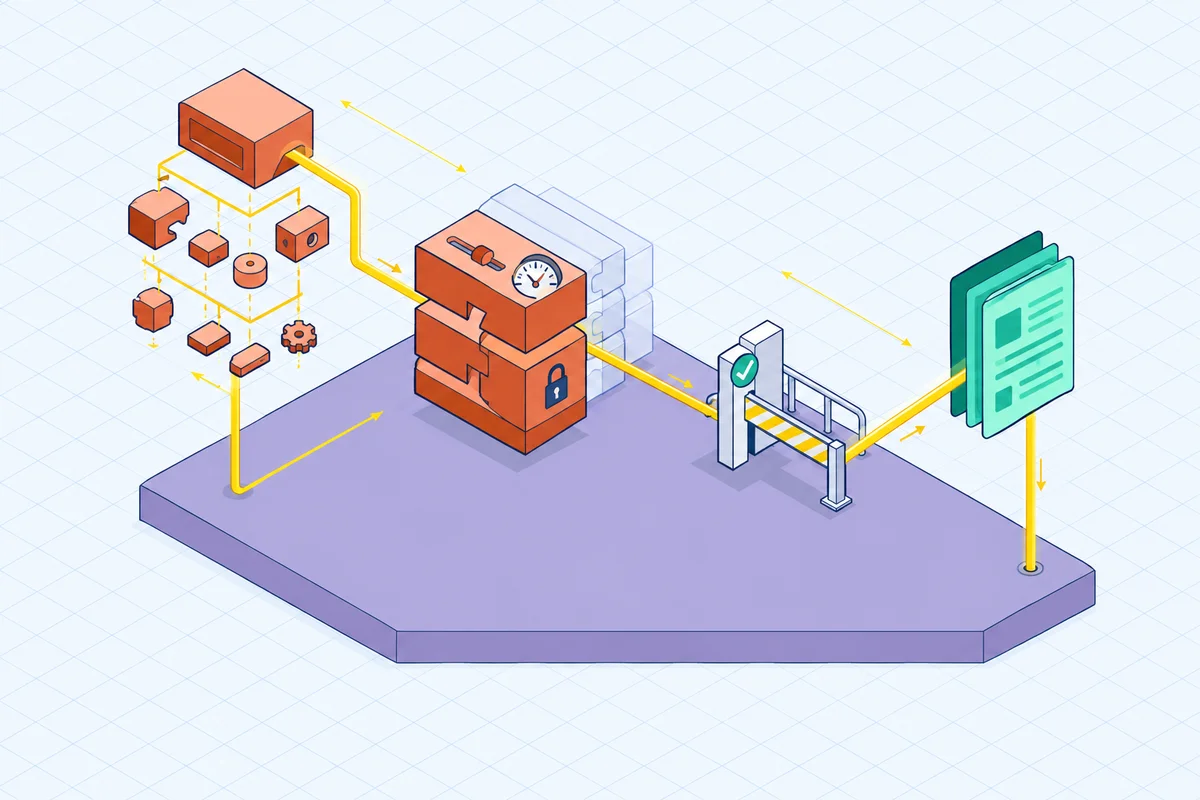
Salesforce CPQ administration is capable but uneven: some changes are a few clicks, and others quietly become projects. A Salesforce CPQ admin can usually add a product, adjust a price book entry, or edit a discount schedule without help. The friction appears when quoting logic has to change shape rather than value.
Several design characteristics drive that:
- Managed package architecture. Salesforce CPQ ships as a managed package built on SBQQ objects. You configure within what the package exposes, and you cannot modify what it does not.
- Layered rule interaction. Product rules, price rules, and constraint logic interact. Changing one condition can affect bundles and nested bundles in ways that only surface in regression testing.
- Custom calculation logic. Many orgs extended pricing through Quote Calculator Plugin customizations, which are written in JavaScript. Once pricing behavior lives in QCP, routine pricing changes become code changes with a deployment path.
- Template work. Quote and proposal document changes often route to a specialist rather than the person who owns the content.
None of this means Salesforce CPQ is a poor product. For moderate-complexity quoting with a stable catalog and straightforward discounting, it still does the job, and existing customers are under no obligation to move. The question is how much of your change backlog sits outside your own hands.
What "Admin-Configurable" Should Mean on Day One
Admin-configurable means a business administrator can change quoting behavior, see the effect, and release it, without a developer and without a deployment cycle. That is a higher bar than "has a settings page."
Use this as your day-one checklist when evaluating any Salesforce CPQ alternative or successor:
- Catalog and options. Can you add a product, option, or dependency and have it behave correctly in configurations the same day?
- Pricing rules. Can you change tiered, volume, or contract-specific pricing rules without scripting?
- Approval rules. Can you adjust a discount threshold and have approvals route accordingly, without rebuilding the workflow?
- Preview before release. Can you see what a rule change does to existing configurations before it reaches sellers?
- Governance. Who is allowed to edit which logic, and is there a record of what changed and who changed it?
- Documents. Can the person who owns quote and proposal content edit the template directly?
- Write-back. Does the configured result write back to standard or custom Salesforce objects that your reporting and downstream processes already use?
If a vendor demo answers "yes" to all of these but only with their implementation team in the room, you have your answer about day-one ownership.
How Experlogix CPQ Handles Admin Ownership
Experlogix CPQ puts rule, pricing, and workflow maintenance in a low-code environment intended for business administrators rather than developers. This is the Admin and Design Center: a logic-based interface where admins model products, services, configuration rules, pricing logic, and approval workflows, preview the impact of a change, and deploy it without writing code.
Three parts of that matter to a Salesforce CPQ admin specifically.
Low-code configuration with preview and governance
Rules and workflows are built with low-code tools rather than heavy development. Admins can preview impacts before deploying, which addresses the regression-testing anxiety that comes with changing interdependent product and price rules. Role-based permissions control who can edit which rules, and version control records what changed and who changed it. That governance layer is separate from quote approvals: it governs the logic itself, which becomes more important as your admin team grows.
A rules engine built for dependency-heavy products
The Experlogix CPQ rules engine evaluates options and dependencies in real time and applies the relevant rules at each stage of configuration, checking validity, pricing, and compliance before a quote goes out. For admins, the practical benefit is that complex product behavior is expressed as modeled logic rather than accumulated custom code.
Changes that stay inside Salesforce CRM
Experlogix CPQ provides an embedded configure-price-quote experience: reps configure, price, and quote without leaving the Salesforce interface they already use. Experlogix reads from Salesforce and writes back configuration details, pricing calculations, and approval status, and can write to standard or custom Salesforce objects without developers. Cloud Connect handles synchronization of quotes, orders, and approvals across CRM and ERP (enterprise resource planning) without custom code, which reduces the middleware and point-to-point integration that admins otherwise inherit and maintain.
Document templates follow the same principle. The Experlogix template builder is a Microsoft Word add-in, so the people who own proposal content can edit order form and proposal templates with dynamic fields, conditional content, calculations, and auto-expanding tables in a tool they already know, rather than filing a ticket.
Honest Trade-Offs Before You Change Anything
Admin autonomy is one criterion among several, and it should not drive the whole decision.
- Staying on Salesforce CPQ is defensible. Support continues, renewals continue, and if your catalog is stable and your admins already cover most change requests, the operational case for moving is weak.
- Revenue Cloud Advanced (RCA, now part of Agentforce Revenue Management) is where Salesforce is investing. It uses a different data model and configuration approach, so moving there is a reimplementation rather than an upgrade. If you are committed to a single-vendor revenue platform spanning billing and revenue lifecycle, that redesign may be worth it.
- A no-code CPQ promise still requires skill. Low-code configuration shifts work from developers to administrators; it does not remove the need for people who understand your products, pricing, and approval policy. Budget for enablement.
- Very simple catalogs and pure self-service SaaS models rarely need an industrial-grade configurator. If your quoting is a short price list and a standard discount ladder, a lighter approach may fit better.
The Bottom Line for the Salesforce CPQ Admin
Salesforce CPQ is end of sale, not end of life. You can renew, add users, and keep receiving support, so there is no forced timeline and no reason to act out of urgency. The real decision is about ownership: how much of your quoting logic you can change yourself, and how much depends on managed package constraints, QCP customizations, and outside specialists.
Judge any alternative on day-one capability. An admin should be able to add a product and its dependencies, adjust pricing rules, move an approval threshold, preview the result, deploy it under role-based permissions and version control, edit the quote document, and have the configured output land on Salesforce records as the system of record. Experlogix CPQ is one way to get there, with low-code administration, a dependency-aware rules engine, an embedded Salesforce experience, and write-back to standard or custom Salesforce objects without developers.
When administration genuinely sits with the business, changes ship in the same week they are requested, pricing and discount policy stay consistent across sellers, and your IT and development capacity returns to work that only they can do. A practical next step: take your last two quarters of CPQ change requests and sort them into three columns, admin-completed, specialist-required, and never-completed. That inventory will tell you more about your real CPQ constraint than any vendor comparison.
Veelgestelde vragen
Can business users maintain Experlogix rules, pricing and workflows without writing code?
Yes. The Experlogix CPQ Admin and Design Center is a low-code environment where business admins model products, services, configuration rules, pricing logic, and approval workflows, preview the impact of a change, and deploy it without writing code. Role-based permissions control who can edit which rules, and version control records what changed and who changed it.
Can Salesforce admins manage CPQ without custom code?
Partly, depending on the change. In Salesforce CPQ, admins can usually handle value changes such as adding products, updating price book entries, or editing discount schedules. Changes that alter the shape of quoting logic, especially pricing behavior built in the Quote Calculator Plugin, often become code changes that need a developer or consultant.
What should a CPQ admin be able to do on day one?
An admin should be able to add a product, option, or dependency. They should also be able to change pricing rules without scripting, adjust approval thresholds, and preview the effect of a change before release. Other basics include controlling who can edit which logic, editing quote and proposal templates directly, and confirming that configured results write back to the Salesforce records your reporting already uses.
Does low-code CPQ remove the need for skilled administrators?
No. Low-code configuration shifts work from developers to administrators, but you still need people who understand your products, pricing, and approval policy. Plan for enablement so that your admins can safely own the logic they are now able to change.
Watch business admins model products, pricing rules, and approval workflows in the Experlogix CPQ Admin and Design Center. They preview each change and deploy it without code, inside the Salesforce experience your sellers already use.