If your sales team quotes one number and the order form, contract, or ERP handoff shows another, you have quote-to-contract drift. For teams running Salesforce CPQ, the cause is usually not a single bug. It builds up as calculation logic spreads across pricing rules, custom code, templates, and downstream systems. This article explains where drift comes from, why enterprise buyers now write it into their CPQ requirements, and what to test before you choose your next quoting platform.
TL;DR
- Quote-to-contract drift happens when the figures a rep sees are recalculated, rounded, or re-keyed differently somewhere between the quote, the order form, the contract, and the downstream order.
- In Salesforce CPQ, the usual contributors are layered product and price rules, Quote Calculator Plugin (QCP) customizations, template logic that restates calculations, and integration code that transforms values on the way out.
- More buyers are asking for a single calculation engine. That means one place where configuration, pricing, discounting, and approvals are resolved, with every downstream document and record reading from that result.
- Salesforce no longer sells Salesforce CPQ (configure, price, quote) to new customers, but existing customers can still use it. This is end of sale, not end of life. Drift is a reason to tighten your architecture, not a reason to panic.
- The practical next step is to trace one real deal from configuration to signed document to order and find every place a number is recalculated.
What Quote-to-Contract Drift Actually Is
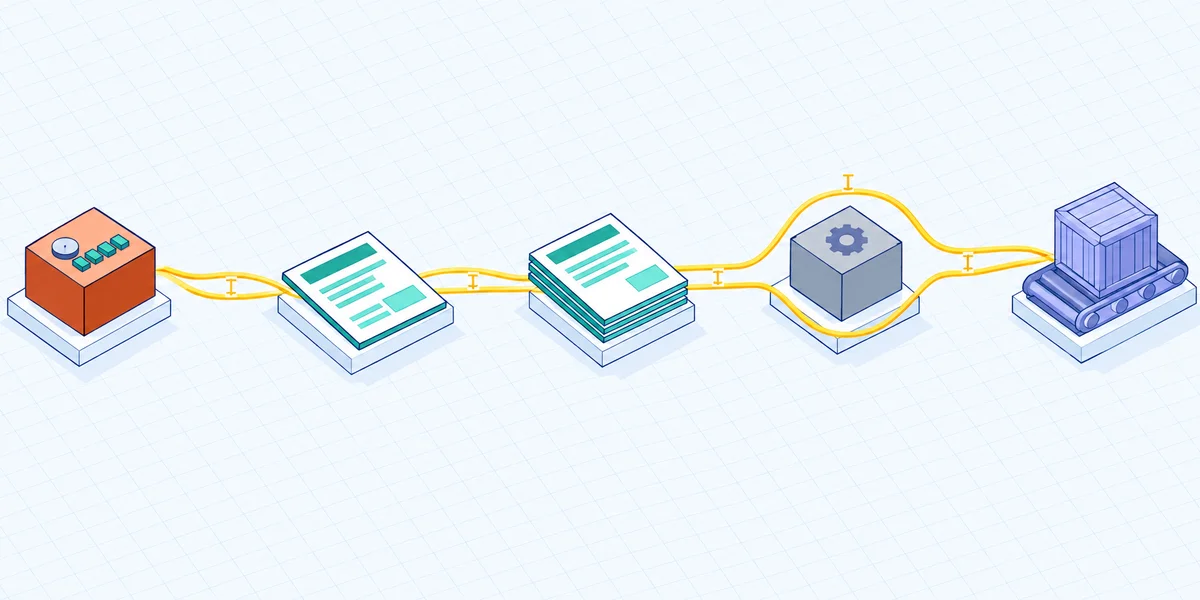
Quote-to-contract drift is the gap between what was configured and priced in the quote and what finally appears on the order form, the contract, and the booked order. It is rarely dramatic. Common examples include:
- A tier applied at quote time but not at renewal.
- A rounded unit price that no longer multiplies out to the stated total.
- A discount approved at one threshold and documented at another.
- An option that was configured but never carried into the order.
The cost lands downstream. Finance has to reconcile, legal has to rewrite, and operations builds the wrong thing or holds the order. Customers notice, and they start to trust the quote less. In quote-to-cash terms, every one of those corrections is unplanned rework on a deal you already won.
Why it is hard to see
Drift is hard to detect because each step looks correct on its own. The quote calculates correctly. The template renders correctly. The integration maps correctly. The error only shows up when you compare the four artifacts side by side, which almost nobody does systematically.
Where Salesforce CPQ Deployments Tend to Introduce Drift
Salesforce CPQ handles moderate-complexity quoting well, and many organizations run it for years without serious issues. Drift tends to appear as configuration layers build up over time.
- Rule layering. Product rules, price rules, and discount schedules each work on their own. The interactions between them, especially across nested bundles, are hard to reason about and hard to regression-test after every change.
- Quote Calculator Plugin logic. QCP customizations are JavaScript extensions to the pricing calculation. They are powerful, but they put part of your pricing truth into code that few people on the team can read. That code also has to stay in step with every rule change.
- Templates that restate math. If an order form or proposal template recalculates totals, applies its own rounding, or formats values with its own logic, the document can disagree with the quote record it came from. Who can edit order forms and proposal templates, and how, shapes how often this happens.
- Integration transformations. Custom code or middleware that transforms values as quote lines move to contracting, billing, or the ERP (enterprise resource planning) system is another place where the number can change.
- Amendments and renewals. Co-terming, proration, and ramp date math are where small differences compound across a multi-year agreement. That is especially true when renewal pricing carried forward from the original deal is recomputed instead of preserved.
None of this means Salesforce CPQ is broken. It means the calculation is spread across several places, and that kind of calculation drifts unless it is governed tightly.
The Requirement Buyers Now Write Down: A Single Calculation Engine
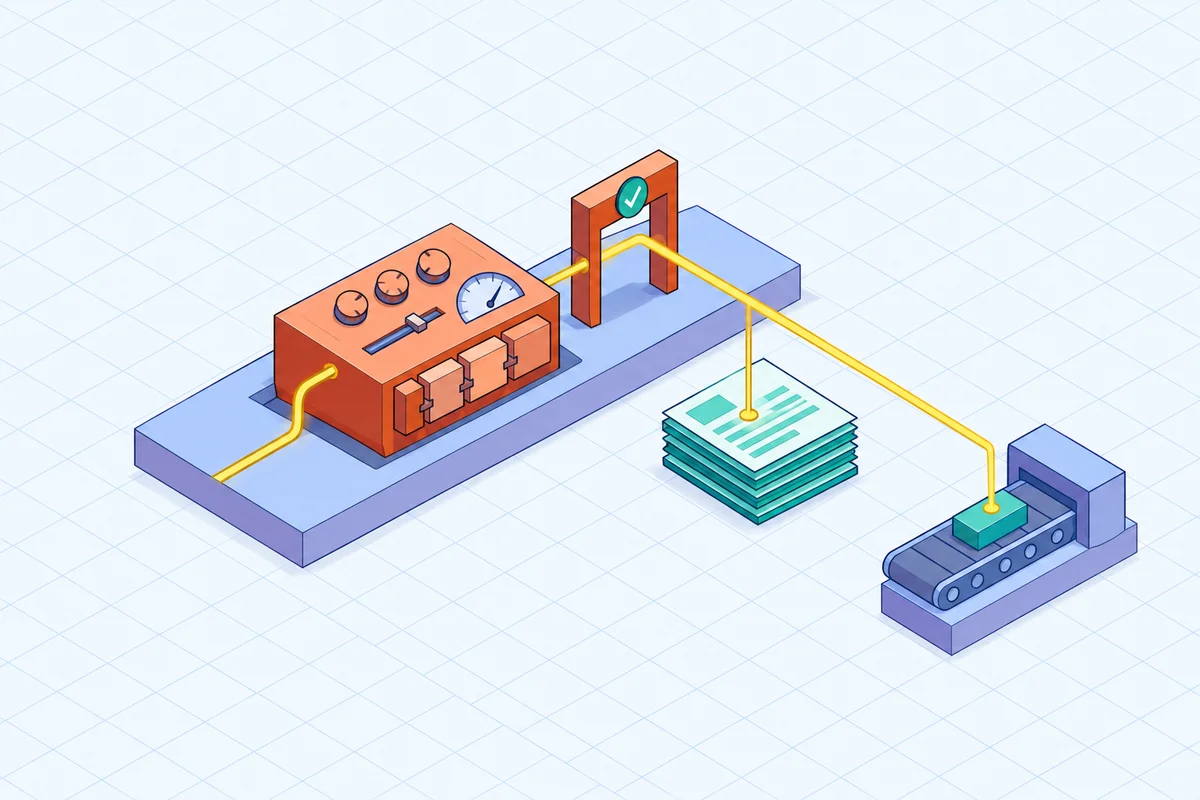
A requirement that comes up more and more in CPQ evaluations is a single calculation engine. The idea is simple: configuration, pricing, discounting, and approval results are resolved in one engine. Every artifact that follows consumes that result instead of recomputing it. That includes the order form, the contract package, the booked order, and the ERP handoff.
What that looks like in practice:
- One authoritative result per quote version, with the configuration, prices, discounts, and approval state stored together.
- Documents generated from the stored result, not from arithmetic inside the template.
- Downstream systems receiving the same values the rep saw. They map the values but do not recalculate them.
- Full traceability, so you can explain months later why a line was priced the way it was.
Order form accuracy is the visible test of all of this. If the document a customer signs matches the quote line for line, the engine is doing its job.
What to Put in Your CPQ RFP Requirements
Write requirements you can test with your own data, not demo data. Useful items include:
- Name the single system that performs configuration and pricing, and state what, if anything, recalculates afterward.
- Require document generation to bind to the stored quote result, with rounding and currency behavior stated explicitly.
- Require approval thresholds to be evaluated against the same calculated values that appear on the document.
- Ask what happens on amendment and renewal: which prior values are carried forward and which are recomputed.
- Require a traceable audit record for every price, discount, and approval decision.
- Test with your hardest real quote, including nested options, mixed revenue types, and a full approval cycle. Then compare the quote, document, contract, and order output.
How Experlogix CPQ Approaches the Problem for Salesforce CRM Customers
Experlogix CPQ is one way to address drift while keeping Salesforce CRM in place. Reps configure, price, and quote inside the Salesforce interface they already use, without separate logins or switching between tools. Experlogix reads from Salesforce and writes back to it. It writes enriched configuration details, pricing calculations, and approval status in real time, and it can write to standard or custom Salesforce objects without developers.
The architecture matters for drift. Cloud Connect is designed to synchronize quotes, orders, and approvals across CRM and ERP without custom code. That removes the middleware and point-to-point integrations where values are commonly transformed or lost. Experlogix CPQ also takes a low-code approach, which reduces how many hand-coded extensions have to stay in sync with your rules. Guided selling steers users toward valid configurations. For manufacturers, Experlogix CPQ supports BOM (bill of materials) and routing automation, so the configuration that was quoted can drive the structured data passed to production.
To be fair about fit: if your catalog is simple, your rules are few, and your quotes are short, Salesforce CPQ probably keeps quotes and contracts consistent well enough. In that case, the right move is to tighten your rules and templates. If your organization has already committed to a Revenue Cloud Advanced (RCA) reimplementation, that project is also a chance to consolidate calculation logic, as long as you treat it as a redesign rather than an upgrade.
FAQ
What is quote-to-contract drift?
Quote-to-contract drift is the gap between what was configured and priced in a quote and what appears on the order form, the contract, and the booked order. It shows up as changed tiers, rounding mismatches, discounts documented at the wrong threshold, or configured options that never reach the order.
How are quote calculations kept consistent through contracts, orders and documents?
Resolve configuration, pricing, discounting, and approvals once, and store that result per quote version. Documents, contracts, and downstream systems then read from that stored result. They map values rather than recalculating them, and rounding and currency behavior are defined explicitly.
What is a single calculation engine in CPQ?
It is one engine that produces the authoritative configuration, price, discount, and approval result for a quote. Everything that follows uses that result, including the order form, the contract package, the booked order, and the ERP handoff. Nothing downstream recomputes it.
What should a CPQ RFP require for order form accuracy?
It should require that document generation binds to the stored quote result, with rounding and currency behavior stated explicitly. Approval thresholds should be evaluated against the same values shown on the document, and every price and discount decision should have an auditable record. Test it with your hardest real quote and compare the quote, document, contract, and order line by line.
The Bottom Line on Quote-to-Contract Consistency
Quote-to-contract drift is a symptom of your architecture, not a lack of discipline. It appears wherever calculation logic lives in more than one place: rules, QCP code, templates, and integrations. Salesforce CPQ customers are not under time pressure here, since existing customers can still use the product. They are under accuracy pressure, though, and that pressure grows as catalogs get more complex and revenue models get more mixed.
Buyers are increasingly converging on the same fix: a single calculation engine, documents bound to the stored result, approvals evaluated on the same values, and downstream systems that map rather than recompute. Teams that get this right spend less time reconciling, send documents their customers can trust, and make it easier to get from a signed order form to a clean booking.
Start by tracing one recent complex deal end to end. Put the quote record, the generated order form, the executed contract, and the booked order side by side. Mark every field where a number was recalculated, rounded, or re-keyed. That short audit will tell you whether to tune what you have or change the quoting layer underneath it.
See how Experlogix CPQ lets reps configure, price, and quote inside Salesforce while writing pricing calculations and approval status back in real time.